Metropolitan News-Enterprise
Wednesday, January 2, 2002
Page 7
Perspectives (Column)
Vogel’s
Assaults on Colleagues Give Rise to Query: Was Roth Right?
By ROGER M. GRACE
It’s July 5, 1990. The place is the Paramount Plaza, in the mid-Wilshire
area, where the Court of Appeal for this district has its temporary quarters.
The Commission on Judicial Appointments has convened in the oak-lined courtroom
to pass on the nomination of Los Angeles Superior Court Judge Miriam A. Vogel
to the post of associate justice of Div. One. The panel is comprised of Chief
Justice Malcolm Lucas, Attorney General John Van de Kamp, and Lester Wm. Roth,
the senior Court of Appeal presiding justice. For eight years, he has sat as a member
of the commission when it has acted on nominations to the Supreme Court or to
the Court of Appeal here in the Second District. In his 90s, he’s a quiet and
pensive man, devoid of controversy. He has never cast a negative vote on a
nominee.
After hearing testimony, Lucas votes to confirm. Van
de Kamp does, also. Roth startles those assembled by announcing:
“I do not affirm.”
Vogel, he opines, “is not really truly gifted with the
desire or faculty to expand the judicial field.”
Lucas swears in the new justice.
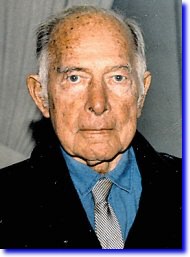 |
LESTER
Wm. ROTH
California
Court of Appeal,
1963-91
As
senior presiding justice of the district, he voted against confirmation of Miriam
Vogel as an associate justice of Div. One.
|
|
Later, Roth elaborates in an interview with this
newspaper on his reasons. He comments that an appellate court nominee should
receive the benefit of a doubt when that person “comes from a decent college,
has a decent education.” With respect to Vogel, however, he says the record
“excites one’s suspicions.”
She has no college degree and earned her law degree at
Beverly College of Law (now Whittier).
In examining her background, Roth remarks, “you don’t
get the picture of someone who listens to the other guy.”
He asserts that “the record shows, when it is studied,
that there is fundamental error” inherent in the appointment. The jurist says
of Vogel:
“She undoubtedly can do a lot of things in a solid and
profitable way. But I don’t think she should be a judge.”

Was Roth right in voting against confirmation?
There are those who would insist he was not. Indeed,
Vogel’s opinions are marked by clarity, and they are often insightful. Some of
her opinions in the area of civil procedure are particularly praiseworthy.
Other observers, however, would credit Roth (since
deceased) with prescience. Vogel’s opinions all too often contain seemingly
unnecessary attacks on one of the parties, the trial judge, or on her colleagues.
In launching her offensives, she is seen as departing from the customary and
proper role of an appellate court jurist.
It is doubtful that her colleagues in Div. One would
take issue with Roth’s vote. Vogel is not one who “listens to the other guy,”
even when that person is a member of the same court as she. To the contrary,
she is notoriously disputatious, and is currently engaged in a campaign,
through her opinions, to demean two of her colleagues, Presiding Justice Vaino
Spencer and Justice Robert Mallano. For whatever reason, she has exempted
Justice Reuben Ortega, also a member of Div. One, from her efforts at
belittlement.
As I discussed in my last column, Vogel on Dec. 20
filed a concurring opinion in each of two cases criticizing the writing quality
of majority opinions by Spencer, and did the same thing in a concurring opinion
last Friday. Her attacks, in my view, were not only baseless, but out of line.
Assailing the legal reasoning in a majority opinion is one thing—it’s obviously
appropriate; ridiculing the author’s manner of expression, however, is quite
another matter, amounting to the insertion of improper matter in a judicial
opinion.
In other cases decided during the past five months:
•On Oct. 30,
Mallano wrote for himself and Spencer in Ward v. Superior Court,
Albertson’s, Inc., RPI. The opinion directed the Los Angeles Superior Court
to vacate an order for arbitration of a dispute.
Joanne Kay Ward and others had filed a class action
against Albertson’s, their former employer, claiming that the market chain did
not pay off employees who quit or were fired within the time frame mandated by
the state Labor Code. The employees were members of a union, and a collective
bargaining agreement existed between the union and Albertson’s. The employer
moved to compel arbitration pursuant to a clause in that agreement, and Los
Angeles Superior Court Judge Morris Jones granted the motion.
In countermanding the trial court, Mallano said that
as a matter of federal law, there must be arbitration of a civil action brought
by a unionized employee against the employer—but only if the dispute entails an
interpretation of the collective bargaining agreement. Here, he reasoned, the
dispute did not arise under that agreement, but “is based on independent state
law.”
He cited a United States Supreme Court case, Livadas
v. Bradshaw (1994) 512 U.S. 107. There it was held that a claim under the
California Labor Code that payment of wages had not been made timely upon
termination of employment presented “a question of state law, entirely
independent of any understanding embodied in the collective-bargaining
agreement between the union and the employer.”
The opinion was not certified for publication. That
drew the wrath of Vogel.
She growled in her dissent:
“I cannot understand the ardor with which my
colleagues embrace this lawsuit and endorse the plaintiffs’ effort to erode the
collective bargaining process. I cannot understand their eagerness to place
their imprimatur on a class action lawsuit, a form of action that, in this
context, will inevitably dilute the ability of unions to negotiate with
certainty on behalf of their members….
“Similarly, I cannot understand my colleagues’ refusal
to publish this opinion (I asked them to publish, they said “no”)….The issues
in this case are significant, the effect of the majority opinion potentially
far-reaching. In my view, my colleagues’ refusal to publish concedes their
doubts about the propriety of their conclusions—and lends support to the view
that result-oriented opinions are routinely swept under the ‘not for
publication’ rug.”
At one point in her dissent, Vogel accused her
colleagues of embracing a “nonsensical and unsupported assertion” by the
petitioners. She went on to say:
“[M]y colleagues…opt for a rule that permits an
individual to sidestep available grievance procedures. That their approach
might cause arbitration to lose its effectiveness does not concern them. That
their decision is a step toward the evisceration of a central tenet of federal
labor-contract law—that it is the arbitrator, not the court, who has the
responsibility to interpret the labor contract in the first instance—does not
concern them….What does concern them? I haven’t a clue, and can only explain
why, given the language of the [collective bargaining agreements] and the
cases, they are just plain wrong.”
On Page 28 of her dissent, Vogel uttered, in
exasperation:
“I could go on, but what’s the point? My colleagues
must believe they are right, or at least that their desire for the result they
reach justifies the means to their end. They will not be persuaded otherwise.
For everyone else, I have stated the reasons for my disagreement, and there is
not much more to be said other than the obvious—I would deny Ward’s petition.”
I would certainly not quarrel with the proposition
that appellate court justices do, when they are so inclined, twist the law or
the facts to reach a desired result—and that when they do so, they will more
likely than not opt for non-publication. That lamentable truism is a black mark
on our judicial system. (Perhaps it will gradually become a “gray mark” as
opinions that are not certified for publication gain readership; now that they
are available on the Judicial Council’s website, justices might be less apt to
conjure up “for-this-case-only” propositions of law.)
Result-oriented decisionmaking is to be abhorred. But
so is any injudicious accusation by a dissenting jurist that the majority has
engaged in such a practice based on no more than the dissenter’s disagreement
with the result.
As Justice Marcus Kaufman aptly observed in a
concurring opinion in Williams v. Superior Court (1989) 49 Cal.3d 736:
“Forceful and reasoned dissents are, of course, valuable tools in the shaping
of the law. But attacks on the purposes and assumed intent of one’s colleagues
destroy the collegiality essential to the proper functioning of an appellate
court, and undermine the public respect and confidence so essential to the rule
of law.”
|

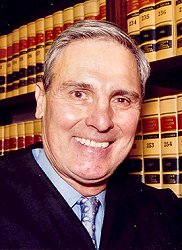
MIRIAM
VOGEL
versus
|
|
|
|

|
|
ROBERT MALLANO
|
VAINO
SPENCER
|
|
•On Aug. 15,
Div. One decided Account Management Associates v. Sanglimsuwan,
published in the slip opinions at 91 Cal.App.4th 773. (The Supreme Court
subsequently depublished it.) Mallano wrote the opinion and Spencer concurred.
The opinion reversed a judgment in favor of the
plaintiff in a foreclosure action. The defendant had agreed to pay monies in
satisfaction of a stipulated judgment in a prior case; the obligation was
secured by a deed of trust; the defendant defaulted. The final sentence of the
stipulation read: “The court shall retain jurisdiction under CCP §664.6 to
enforce this stipulation for judgment.”
Mallano noted the nature of the action: “Plaintiff filed
the present action to foreclose on the trust deed.” However, his opinion went
on to say:
“The question on appeal is whether the trial court
properly granted plaintiff relief under section 664.6 of the Code of Civil
Procedure—which authorizes a trial court to enforce a settlement agreement
signed by the parties during pending litigation—even though defendant did not
sign the stipulation for judgment. We conclude that, without defendant’s
signature, the stipulation was not enforceable and therefore reverse.”
He pointed out that the California Supreme Court held
in Levy v. Superior Court (1995) 10 Cal.4th 578 that a settlement
agreement, to be enforceable under §664.6, must be signed by the parties, and
that their lawyers’ signatures won’t suffice.
Sec. 664.6 provides:
“If parties to pending litigation stipulate, in a
writing signed by the parties outside the presence of the court or orally
before the court, for settlement of the case, or part thereof, the court, upon
motion, may enter judgment pursuant to the terms of the settlement. If
requested by the parties, the court may retain jurisdiction over the parties to
enforce the settlement until performance in full of the terms of the
settlement.”
Had the judgment creditor made a motion to enforce the
settlement agreement through summary procedures, pursuant to §664.6, the motion
would properly have been denied, under Levy, because the judgment debtor
had not personally executed the settlement agreement. However, the judgment
creditor did not bring such a motion. As Vogel pointed out in her dissent, it
sued in an action to foreclose on the deed of trust—an instrument which the
judgment debtor had signed. (I obtained a copy of the complaint in the
foreclosure action; it makes no mention of §664.6.) It would appear that Vogel
is correct in observing, in her dissent, that “Section 664.6 is irrelevant” to
the foreclosure action.
However, Vogel’s dissent was not merely an explanation
of her reasons for disagreeing; it was a denunciation. She proclaimed:
“Most puzzling…is the majority’s justification for
casting the facts and mischaracterizing the plaintiff’s arguments to fit an
obviously predetermined result. I haven’t a clue about why they’ve approached
this case the way they have, and thus can only respond by stating all of the
relevant facts and the law that applies to this case.”
She then provided a full statement of facts.
Even if Mallano and Spencer did err (as I would
suggest they did) in perceiving that the unavailability of a motion under
§664.6 had some bearing on the viability of a new action to foreclose on a deed
of trust, that error surely did not justify what amounts to an assault by Vogel
on her colleagues’ integrity. For one justice to accuse the majority of erring
is commonplace; to accuse them of intentionally bending the facts and
distorting the contentions is a severe charge, not to be made lightly. Vogel
has made that charge apparently based on a hunch derived from the mere fact
that Mallano and Spencer view a statute to be relevant which she thinks isn’t.
If the majority did fail to recognize merit in Vogel’s
view, could it possibly be that they instinctively cover their ears when Vogel
shouts, thereby occasionally shutting out utterances with merit?
•Div. One
decided Consumer Cause, Inc. v. SmileCare, 91 Cal.App.4th 454, on Aug.
9. In an opinion by Mallano, it held that summary judgment was improperly
awarded to a defendant by Los Angeles Superior Court Judge Aurelio Munoz based
on the plaintiff’s inability to refute an affirmative defense.
The defendant, a dental corporation, had been sued for
failing to post warnings required by Prop. 65 that the silver filings it used
contained mercury, a reproductive toxin. Its affirmative defense was that there
is an exemption to the posting requirement where an exposure to a chemical
“will have no observable effect assuming exposure at one thousand (1,000) times
the level in question for substances known to the state to cause reproductive
toxicity.” The defendant made no such showing to that effect. It was, then,
irrelevant that the plaintiff had admitted in discovery that it did not have
evidence negating the defense, the majority held. No burden befalls the plaintiff,
Mallano pointed out, until such time as the defendant has made a prima facie
showing that the affirmative defense has merit.
Vogel dissented, thundering:
“According to the majority opinion, lawsuits under
Proposition 65 can be filed and prosecuted by any person against any business
based on bare allegations of a violation unsupported by any evidence of an
actual violation—or even a good faith belief that a defendant is using an
unsafe amount of a chemical known by the state to cause cancer or reproductive
toxicity. Unconcerned about the practical effect of their decision, and
undeterred by a plaintiff’s admission that it has no evidence at all to suggest
that the defendant is using an unsafe level of any listed chemical, my
colleagues have endorsed and encouraged a form of judicial extortion.
“Here is how it works (it certainly appears to be what
was done in this case). Pick a dentist or doctor, any dentist or doctor (but
preferably one with a deep pocket). Visit the dentist’s or doctor’s office. If
you don’t see Proposition 65 warning signs on the walls or counters, go to the
nearest courthouse, file a complaint, allege a failure to warn, and ask for
$2,500 for each day the dentist or doctor has failed to give the required
warnings. Don’t be concerned when the dentist or doctor answers and alleges as
an affirmative defense that he is exempt from the warning requirements because
he uses only trace amounts of the chemical, and certainly not enough so that
anyone’s exposure to the chemical is 1,000 times the level that will result in
an observable effect. Don’t worry when the dentist or doctor sends you some
interrogatories and requests for admissions—go ahead and admit that you have no
evidence about the level of the chemical he uses (and thus no reason to believe
that he is in violation of the law), and admit that you do not contend that
exposure at the level used by the dentist or doctor will result in any
observable effect.”
Vogel’s dissent was predicated on pure emotion.
Plainly, there was no substance to her allegation that her colleagues (you
guessed it, it was Spencer who had joined in Mallano’s opinion) “have endorsed
and encouraged a form of judicial extortion.” What they endorsed and encouraged
was faithful application of the law to the facts, which required the reversal
of a summary judgment granted to a defendant based on an affirmative defense
which the defendant had not established.
•In People
v. Elam, 91 Cal.App.4th 298, decided Aug. 2, a conviction was
reversed based upon Los Angeles Superior Court Judge Judith Champagne’s error
in dismissing “Juror No. 3” in the midst of deliberations. She did so based on
his difficulty in understanding and expressing himself in English. Other jurors
complained of the language problem. However, No. 3 had served in the United
States Navy, had an AA in English from Glendale Community
College, and was able to converse with Champagne
intelligently and intelligibly, as reflected by the transcript of their
dialogue provided in an appendix to the opinion.
Writing for the majority, Spencer said:
“[I]t is noteworthy that the other jurors showed great
impatience with Juror No. 3. The jury had deliberated less than three hours
when the foreperson sent the complaint to the court. This suggests that 11
jurors reached agreement rather quickly, making the failure of the 12th juror
to agree all the more annoying and frustrating. In such an atmosphere, it is
more likely that majority jurors will attribute genuine differences of opinion
to ‘language problems,’ or ‘lack of comprehension,’ where possible.”
Mallano concurred. Vogel dissented.
“In my view,” she wrote, “the majority’s conclusion
ignores the record.”
Objectively, the majority did not “ignore” the record.
It recited the adverse comments from fellow jurors about Juror No. 3 in detail.
The majority simply drew a different conclusion from the record than Vogel did.
Her opinion is comprised merely of the allegation that
the majority “ignored the record,” her needless recitation of comments by
jurors—needless because Spencer had already covered them—and her conclusory
pronouncement that the record supported Champagne’s finding.
The fact that there was a reversal in the case was
regrettable. However, under the standard set forth in a Supreme Court case
cited by Spencer, People v. Cleveland (2001) 25 Cal.4th 466, reversal did appear
unavoidable. That case, decided in May, bars a trial judge from replacing a
juror based on a finding pursuant to Penal Code §1089 that the juror is “unable
to perform his duty” unless that finding is grounded on a “demonstrable
reality.” The mere fact that Juror No. Three spoke with a heavy accent and
could not always be understood, and that he was not in sync with fellow jurors,
was a far cry from an objectively discernible inability to serve.
The “demonstrable reality” standard harks back to
1971. It was announced by Justice Stanley Mosk in People v. Compton, 6
Cal.3d 55. “[T]he trial court has at most a limited discretion to determine
that the facts show an inability to perform the functions of a juror,” Mosk
wrote, “and that inability must appear in the record as a demonstrable
reality.”
Spencer and Mallano followed the law, as laid down by
the state’s highest court; Vogel would have taken a different approach.
No, Vogel does not write a separate opinion every time
Spencer or Mallano writes for the majority. She does have another technique, however, for at least hinting at
disdain for what the majority opinion has said.
Take the case of The Committee to Save the Beverly
Highlands Homes Association v. The Beverly Highlands Homes Association, 92
Cal.App.4th 1247, filed Oct. 19. Spencer was the author. Mallano concurred in
the opinion. Vogel “concurred in the judgment only”—intimating that she spotted
something wrong with Spencer’s opinion, though she wasn’t inclined to share her
insight with the reader.
|
Vogel’s Salvos
“[M]y colleagues’ refusal to publish concedes their doubts about
the propriety of their conclusions—and lends support to the view that
result-oriented opinions are routinely swept under the ‘not for publication’
rug.”
•
“Most puzzling…is the majority’s justification for casting the
facts and mischaracterizing the plaintiff’s arguments to fit an obviously
predetermined result.”
•
“[M]y colleagues have endorsed and encouraged a form of judicial
extortion.”
•
“[T]he majority’s conclusion ignores the record.”
|
|
Vogel is, of course, not the only member of the
appellate bench to utilize the irksome technique of concurring in a result
only, without bothering to explain why. The point is, she’s doing it these days
in response to opinions by Spencer or Mallano; she’s not doing it when Ortega
writes for the majority.
In November, Vogel concurred in the judgment only with
respect to four of Spencer’s nonpublished opinions. There is nothing on the
face of any of those opinions that provides a clue as to why a member of the
panel would not concur in all respects.
On Oct. 30, Vogel concurred in the judgment, only,
with respect to two unpublished Mallano opinions. One of them, Ersoff v.
Mardirossian & Associates Inc., stands out; it’s a model judicial
opinion, well-phrased and impeccably reasoned.
This newspaper has honored Spencer, Mallano and Vogel
as “persons of the year.” We feted
Miriam Vogel in 1990, along with her husband Charles Vogel, now the presiding
justice of Div. Four and then the president of the State Bar.
In reading her opinions through the years, I have
sometimes admired the incisiveness of them. At other times when I have looked
at products bearing the brand “VOGEL (Miriam A.)”—especially in the last few
months—I’ve been caused to wonder, with reluctance, if Roth was right.
Tomorrow: a look at Div. One in years gone by.
Copyright 2002, Metropolitan News Company
MetNews Main Page Perspectives
Columns