Tuesday, February 12, 2002
Page 5
Los Angeles Superior Court Office No. 40
Questions Loom as to Capacity of Challenged Jurist
By ROGER M. GRACE, Editor
Second of Two Parts
Floyd Baxter.
The name sounds like that of a character in Mayberry, the mythical town featured in the Andy Griffith Show and in a spin-off. In fact, the Floyd Baxter who will be facing voters at the polls on March 5 is a folksy sort of fellow who would fit right into Mayberry. Cast as a justice of the peace, he’d be ideal.
His real-life role, however, is that of a Los Angeles Superior Court judge, a part which he won as a result of unification on Jan. 22, 2000. Whether he would be up to handling the more complex Superior Court cases is not known, and in all probability, it will never be determined.
At present, he’s still handling the same chores he did as a judge of the Newhall Municipal Court, to which he was appointed by Gov. George Deukmejian in 1985. He remains assigned to the small courthouse in that remote region of the county, about two miles from his home, where felonies and unlimited jurisdiction civil cases are not tried. Viewed by some as a legal lightweight, and with the expressed desire of staying put, it appears doubtful that Baxter will come to handle in his next term what has traditionally been a Superior Court calendar.
That he will have a next term seems near-certain. He has a challenger who, aside from buying a few hundred lawn signs and running off some handbills on a color copier, has mounted no campaign.
The challenger, Ross A. Stucker, is, in fact, remaining in the shadows. No press releases. No campaign consultant. No campaign appearances. He has declined to meet with this newspaper’s editorial board or—up until yesterday—to return reporters’ phone calls. He did permit his photograph to be taken at his Newhall law office, where he is in sole practice. He opened his practice in 1998 after the judges opted not to hire him as a permanent commissioner, though he had been serving as a pro tem for two years.
The sprightly Baxter—who says he has a “type double-A personality”—is, by contrast, not shy about commenting. However, the accuracy of some of his comments, or perhaps the veracity of them, appears doubtful, as covered in Part 1 of this profile.
One case last year which attracted notoriety—entailing sentencing of a “PTA mom” for allegedly leaving the scene of a collision with an unattended vehicle without leaving a note or locating the owner—brings concerns about Baxter into focus. His failure to observe a significant statutory right of the defendant evokes questions as to the judge’s legal knowledge, while his inaccurate recitation of his actions in the case reflects his seeming propensity for making misstatements.
These characteristics apparently were not appreciated by, or were discounted by, the Los Angeles County Bar Assn. in rating the judge “well qualified” for the Superior Court. (Stucker said yesterday he hasn’t checked his mailbox and does not know his rating.)
Rosenfield Comments
One of Baxter’s colleagues at the Newhall facility is Alan Rosenfield, who says of Baxter:
“Legal scholar? Probably not.”
He says that Baxter “doesn’t always have the answer off the top of his head” and must look up the law more often than some other judges. He notes, however, that his colleague is “certainly reliable” in terms of showing up for work.
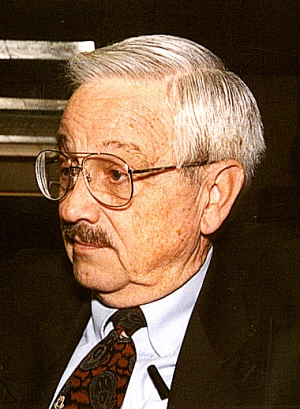
FLOYD BAXTER
The judge characterizes Baxter as a “law-and-order type, pretty conservative.”
Rosenfield relates that the only negative comment he’s heard about Baxter’s performance on the bench is that he can be “abrupt.”
A leading practitioner in the area, who spoke on condition of anonymity, has the same perception of Baxter.
“He’s not real good on the law,” he says. “He’s not a scholar.”
The lawyer terms Baxter “pretty abrupt” and says that Stucker is “far more affable.”
He sizes up Baxter as being “defense-oriented” in civil cases and “prosecution-oriented” in criminal cases.”
Charles Henrick, a Newhall civil practitioner, says he had one trial before Baxter (who mainly handles misdemeanor cases and preliminary hearings) and found him to be “patient.” As to whether Baxter would have the capacity to handle major cases, he says, “I don’t know.”
Guarded Praise
Valencia attorney Larry M. Baker, a criminal law practitioner, says he has appeared before Baxter “hundreds” of times. He remarks that he favors him over Stucker because “experience wins out.”
As he views Baxter:
“I think that he handles the assignment that he has, for the most part, pretty well—which is not to say I would want him on the state Supreme Court.”
Baker goes on to comment:
“I don’t know that Baxter is presently material for a general Superior Court—as we have known it—calendar.”
He adds this observation: “He listens.”
Valencia attorney Trudy J. Robinson likewise says of Baxter:
“He’ll listen. If you have something legitimate to say, he will listen.”
She rates the judge as “very conscientious and very timely in his work” and “very professional.”
By contrast, Robinson says of Stucker: “I don’t believe he has the qualifications to be a judge.”
Acton attorney Jonathan T. Trevillyan, on the other hand, comments that Stucker was “born to be a judge—he just has that temperament.” He relates he has sat in his courtroom and been “overwhelmed” by his patience in not cutting people off. Trevillyan says he only handles civil cases and has only appeared before Baxter once, about 11 years ago.
Santa Clarita lawyer Richard H. Christensen—who says that both Baxter and Stucker are friends of his—evaluates the incumbent as “a highly qualified, experienced judge of good temperament and outstanding legal knowledge” and characterizes Stucker as “a decent human being” and “a hell of a nice guy.”
A former judge observes that Baxter “has a less than stellar reputation.”
Educational Credentials
Those who view Baxter as a legal lightweight will not have to explain away any impressive educational credentials accrued by the judge. Baxter, 65, received a bachelor’s degree in business management from Woodbury University in 1958. He worked as a salesman prior to entering law school, and obtained his J.D. in 1974 from the University of San Fernando Valley College of Law (now known as the University of La Verne College of Law).
Baxter passed the bar exam and went into private practice in 1975. He is married with four children, as well as two foster children who are twins.
The judge complains of time sapped by the campaign from his spending with his wife, who has cancer, but also boasts of donating his time on weekends to working with the Air National Guard.
One of Baxter’s pet projects is “ Teen Court ,” which he established in 1995. Under the program, youthful first offenders are diverted from the juvenile justice system and “tried” by local junior high school and high school students, with “sentences” being in the nature of community service.
Baxter’s inventiveness came to the fore in 1996 when he sentenced a man who had negligently caused two deaths in a boating accident to 720 hours of community service at a morgue.
Newspaper Criticism
The judge’s actions in connection with the sentencing of a woman for hitting the bumper of another car in a parking lot and driving off without leaving a note drew criticism last April in the Los Angeles Times and the Newhall Signal. It’s a matter which Baxter, himself, brings up.
As he tells it, a woman in a pick-up truck backed into a new car, then went off. Someone took down her license number and she was arrested.
“Her attitude from the beginning is: how dare you take me to trial,” Baxter remarks. He continues: “She gets on the stand and lies through her teeth.”
The judge recites that the woman presented a videotape of her truck; it revealed damage—of the sort that could be caused by backing into a parked car—but the tape, she testified, was taken four years earlier and her vehicle had no new marks.
However, Baxter boasts, he spotted on the tape that the registration tag on the license plate was for 2001.
“The prosecutor didn’t even catch it,” he says. “I caught it.”
He continues:
“She gets convicted. I put her in the bucket. Thirty days in the county jail.”
That was a Friday. Over the weekend, he was hit with editorial criticism that he had abused his powers, Baxter laments.
The judge recounts:
“I brought her back on Monday. I released her, stayed the rest of her sentence.
“Her attitude was quite different on Monday morning than it was on Friday.”
Faulty Account
The problem with Baxter’s recital is that it’s inaccurate.
Neither in the Times nor the Signal was there derision of Baxter for having sentenced the defendant, Linda Jensen, to 30 days in jail. No mention was made in either newspaper of any such sentence. No such sentence was ever imposed.
In both newspapers, commentary was published after Baxter sentenced Jensen to probation. What Baxter was derided for was keeping Jensen behind bars during the five-day interval between the jury convicting her and his sentencing of her. (Prior to the jury’s verdict, she had been free on her own recognizance.)
Court records show that Jensen was convicted on Wednesday, April 4, of violating Vehicle Code §20002(a), a misdemeanor. Baxter denied bail and set sentencing for April 16. The judge apparently failed to advert to the requirement of Penal Code §1449 that sentencing in a misdemeanor case take place within five days of the conviction; the hearing was subsequently advanced to Monday, April 9. There was no proceeding in the case on Friday, April 6.
At the April 9 proceeding, Jensen was sentenced to six days in jail, with credit for time served, was placed on probation for 36 months, the conditions of which were community service and restitution, and was ordered to pay $1,900 to Saugus attorney Gary L. Symonds for his services. Although Jensen is not an indigent, Baxter appointed Symonds to represent her at the time of her arraignment.
Symonds reports that when Jensen came before the judge for sentencing, he told her that he had planned to sentence her to 30 days but had changed his mind. The lawyer notes that a “huge number” of community supporters were in the courtroom.
In an April 19 letter-to-the-editor in the Signal, Jensen’s husband, Eric R. Jensen, thanked the people of Castaic for their efforts on behalf of his wife—noting that more than 50 of them had written letters of support that were delivered to the court—and observing that “[s]o many of you attended the hearing that you filled the courtroom to capacity.”
The transcript shows that Baxter said this at the sentencing:
“I had originally planned, having been convicted by a jury of her peers of this particular offense, I had planned to give her what I would normally would give, 30 days in the County Jail.”
Symonds, who says he has handled about 50 jury trials before Baxter—more than any other lawyer, he claims—labels the judge “eminently qualified.” In Jensen’s case, however, “what he did was harsh and I was disappointed,” the lawyer remarks.
The prosecutor, Deputy District Attorney Garrett Dameron, counters that the denial of bail was “appropriate” in light of the judge’s impression that Jensen had “lied on the stand” and possibly “fabricated evidence.” If the defendant had been a 30-year-old male, “there wouldn’t have been a peep” from the community,” he opines.
Right to Bail
It is Jensen, herself, not her lawyer, who points to a legal infirmity in the denial of bail. She cites Penal Code §1272 which provides that a defendant who is convicted of a misdemeanor is entitled to bail “[a]s a matter of right.”
Jensen says she learned of that code section from a copy of an e-mail Deputy Public Defender John Hamilton Scott sent to Los Angeles Times columnist Al Martinez, reacting to his April 16, 2001 criticism of Baxter.
The journalist took the judge to task in a column titled, “A Case of the Penalty Not Fitting the Crime.” He said Jensen was denied bail “because a Superior Court judge, in a twisted display of judicial power, was angry because she denied the incident and because, due to some strange quirk of logic, he considered her a flight risk.”
Martinez scoffed: “He saw her, one supposes, as fleeing into the Colorado wilderness, avoiding howling bloodhounds and armed deputies, and swearing she would never be taken alive, like James Cagney in one of those old prison-escape movies.”
The Signal said in an April 20 editorial titled “The Hangin’ Judge and the PTA Mom”:
“There was no need to lock her up while awaiting the sentence. She may be guilty— and she may not be, as it appears there is a distinct possibility this was a ‘bad’ verdict— but in either case, Baxter’s handling of the defendant was heavy-handed to say the least.
“Jensen, 43, is president-elect of the Live Oak Elementary School PTA and a stay-at-home mother of two. She’s well-known and respected in her community, and has no criminal history. She’s not exactly a hardened criminal or a legitimate flight risk.
“In many circumstances, it’s comforting to know there’s a ‘hangin’ judge’ in town. When gang members, vandals and bank robbers go before the judge, we want to know he’ll throw the book at them.
“But when the ‘criminal’ is a PTA mom who’s accused of a parking-lot fender bender befitting an episode of ‘The Brady Bunch,’ it’s a bit much to throw her in the slammer.”
Jensen, in an interview via e-mail, reflects:
“Judge Baxter gave no consideration as to what would happen to my two minor children as I was immediately taken away in handcuffs and given no opportunity to make any arrangements for my children. This was an extremely traumatic time for my children and to this day, my youngest son continues to have nightmares that cause him to wake up crying and in fear of being separated from me.”
Uncommon Error
Was the denial of bail inordinate?
Retired Los Angeles Superior Court Judge Richard P. Byrne, a former presiding judge who says he has known Jensen and her family for several years, comments:
“If what has been reported is true, it’s a blatant misuse of judicial power. Anyone who would do something like that should not be sitting as a judge.”
Former Los Angeles County Bar President Sheldon Sloan, who sat on the Los Angeles Municipal Court in the 1970s, remarks:
“I never heard of a denial of bail, except in one instance. I did, on occasion, remand to custody pending a bail hearing, but that was when the attorneys were arguing about OR versus bail, and amount, and we needed to obtain some information about employment, etc. It would be for hours, not days, even.”
A member of the Court of Appeal says, flatly, that “the accused is entitled bail in a misdemeanor matter,” and expresses the view that where a judge lacks knowledge of the laws relating to bail, “there is no excuse.”
Retired Los Angeles Superior Court Judge Gilbert Alston exclaims:
“Gadzooks! That’s horrendous. You can’t deny bail on a misdemeanor.”
He adds:
“That’s about the most outrageous thing I’ve ever heard.”
He says a judge who commits such a “flagrant abuse of judicial authority” is one who “doesn’t belong on the bench.”
Scott, in his e-mail to Martinez, commented:
“Judge Baxter treated Ms. Jensen’s bail as if she had been convicted of a felony. This means either that he did not know the difference, or that he deliberately chose to ignore it. Either conclusion indicates that he does not have the ability to perform his job correctly.”
Authenticity of Videotape
Did Baxter, through astuteness, catch Jensen in a lie? That is, was the videotape, showing the dent, actually made at a time subsequent to the accident in question?
Here’s Jensen’s account:
“Gary Symonds told me in a telephone conversation I had with him while I was in jail that Judge Baxter announced in chambers—after I had been jailed—and before Mr. Symonds and Mr. Dameron (but off the record)—that the videotape that I presented was fraudulent. At that time, he said it was because the ‘Live Oak Super Kid’ sticker seen on the bumper of the truck in the video was still visible in recent photos of the vehicle and did not look to him to have aged five years. Of course, all one had to do to authenticate the tape was present to his honor Exhibit A and Exhibit B, namely my two sons, who had grown to three times the sizes they were in the video. My eleven year old son, Reese, put it best when he noted that he had been awarded the sticker in question when he was in the first grade (an event that was also recorded on videotape). This is the same tape to which both Mr. Dameron and Mr. Symonds had earlier stipulated authenticity.”
Stucker makes no mention of the Jensen case in his handbill, and has otherwise made no visible efforts to capitalize on the scathing criticism of Baxter in the Times and the Signal.
The challenger, himself, has been the target of no such disparagement in the press—nor, for that matter, has he been the beneficiary of published kudos. He just hasn’t been noticed much.
He received news coverage in this newspaper in 1988 when he declared his candidacy for the seat occupied by Los Angeles Superior Court Judge Gregg Marcus. However, he backed out of the race and would not state—despite cajoling—why he challenged that particular judge in the first place.
The State Bar’s website says there is “no information available” as to any undergraduate degree Stucker might have, but lists the source of his law degree as Mid Valley College of Law.

ROSS STUCKER
Stucker, who was admitted to practice in 1979, worked in the Newhall office of the Alternate Defense Counsel from 1985 until 1995, when the county shut down ADC and set up a second Public Defenders Office. He went into private practice for a short time before being hired by the Newhall court as a pro tem.
After turning over his judicial duties to White, Stucker has worked as an attorney and arbitrator. In June of 1998, he applied for appointment by the City Council to the Newhall Planning Commission, but was turned down.
Qualifications Conceded
Is Stucker qualified to be a Superior Court judge?
Confronted with that question, Baxter pauses—then responds: “Yes.”
Baxter acknowledges, “He’s experienced.” He quickly adds, however, “He’s not as qualified to be as good a judge as I am.”
Retired Newhall Municipal Court Judge H. Keith Byram says of Stucker: “He’s capable.”
Rosenfield comments that Stucker “probably would have some deficiencies” at the outset of service as a judge but speculates that this might be “cured with training” that new judges receive.
A Jan. 14, 1998 “To Whom It May Concern” letter, signed both by Rosenfield (the new presiding judge) and Baxter, said this:
“Mr. Stucker’s judicial background and practice in civil and criminal litigation, and especially in settlement matters and courtroom and motion practice, make him uniquely qualified for another attorney or judicial position.”
Ironically, Stucker once publicly proclaimed that Baxter was needed at his post. An article in the Daily News on Feb. 21, 1991, reported the prospect of Baxter being called to active duty in the Persian Gulf War, and included this sentence:
“Ross Stucker, an attorney with the Alternate Defense Council [sic], said the courthouse cannot afford to lose an experienced judge like Baxter.”
It appears unlikely that Stucker, having challenged Baxter, would today brand him as indispensable—or that Baxter would credit Stucker with being uniquely qualified for the bench.
Copyright 2002,
Metropolitan News Company