Tuesday, June 30, 2026
Page 3
C.A. Affirms Weinstein’s 2022 Los Angeles Rape Conviction
Justices Reject Contention That Judge Erred in Applying ‘Rape Shield Law’ to Bar Sex-Oriented Messages to Impeach Victim; Resentencing Ordered Because Upper Term Imposed Based on Judgment Since Reversed
By a MetNews Staff Writer
|
|
|
|
HARVEY WEINSTEIN convicted rapist |
EVGENIYA CHERNYSHOVA actress/model |
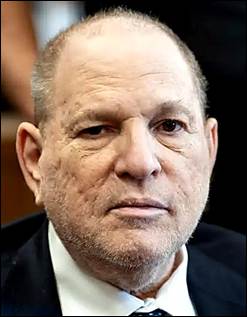
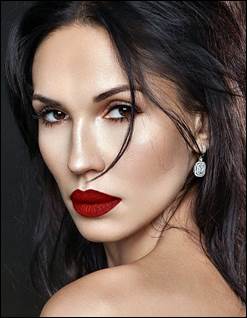
Div. One of the Court of Appeal for this district has affirmed the conviction of former movie producer Harvey Weinstein on three counts of felonious sexual misconduct, saying that the trial judge properly applied the state’s “rape shield law” which seeks to guard against character assassination of victims, but ordered a resentencing, with the concurrence of the Attorney General’s Office.
Friday’s decision, in an unpublished opinion by Justice Michelle C. Kim, rejects claims of prejudicial errors on the part of Los Angeles Superior Court Judge Lisa B. Lench. The slip opinion is 112 pages.
Lench’s judgment was pursuant to a Dec. 19, 2022 jury verdict. Jurors found, with respect to a woman identified in the opinion as “Jane Doe No. 1”—or “JD1”—that Weinstein committed forcible rape, forcible oral copulation, and sexual penetration by a foreign object.
The woman, in later suing Weinstein, revealed herself to be Evgeniya Chernyshova, and she has been so referred to by The Associated Press, ABC News, Variety, and elsewhere.
Lench sentenced Weinstein, 74, to 16 years in prison. She imposed the upper term of eight years for forcible oral copulation based on a factor in aggravation, in the absence of which he would have been sentenced to the middle term of six years on that count.
Kim explained the need for resentencing by noting:
“Here, the trial court imposed an upper term sentence based solely on an aggravating factor that no longer exists—Weinstein’s New York convictions that have since been vacated. As the parties agree, Weinstein is entitled to resentencing. Accordingly, we vacate his sentence and remand the matter for that purpose.”
Other Alleged Victims
Weinstein was also prosecuted in the Los Angeles proceeding for alleged attacks on three other women. He was found not guilty of one court of sexual battery by restraint and the jury was deadlocked on other counts.
The Court of Appeal’s opinion came one day after New York prosecutors said they would not try Weinstein for the fourth time on a rape charge. A 2020 conviction on the charge was reversed on appeal and two re-trials each resulted in a hung jury.
In a separate case in New York, Weinstein is awaiting a September sentencing for an assault.
Conduct in Issue
The attack on Chernyshova, according to the prosecution, took place on Feb. 17, 2013, at the Mr. C Hotel in Beverly Hills. Chernyshova is an actress/model who resides in Rome and came to the U.S. to attend the LA Italia Film Festival, organized by Italian television show host Pascal Vicedomini.
One of Weinstein’s prime contentions on appeal was that Lench erred in barring use of Facebook messages between Chernyshova and Vicedomini by which he sought to impeach each of them based on their insistence that they were merely casual acquaintances. Weinstein’s lawyer wanted the evidence to be admitted in support of the defense theory that Chernyshova was engaged in a sexual relationship with Vicedomini and that, at the time the defendant was purportedly raping her, she was actually at a different hotel with Vicedomini.
Weinstein’s lawyer protested to Lench:
“It’s vital I be able to establish circumstantially to the jury that there is an alternative reasonable explanation for all of her story. She was with Pascal and she made this up. It’s central to our defense and this has nothing to do with rape shield. It has nothing to do with dragging her through the mud. She is a liar. She said ‘We are just friends.’ You don’t just sext with someone you are just friends with.”
The judge remarked at one point that “there is a rape shield law for a reason, even if the defense would like to establish otherwise, and I have to take that into consideration.”
Argument on Appeal
On appeal, Weinstein argued, in a brief by Century City lawyer Michael Freedman and New York attorney Jennifer Bonjean:
“The prosecution theorized that Vicedomini lured the Defendant to his festival by offering JDl as sexual bait and then provided her hotel information to the Defendant….As the prosecutor argued, Vicedomini was the ‘nexus’ between Defendant and JD1….
“The flaw in this story was that it was premised on testimony the prosecution and the court knew was false, namely that JD1 and Vicedomini were merely friends and coworkers, not lovers. The jury was not told that JDl and Vicedomini were engaged in a romantic relationship before, during, and after the festival. Three days before traveling to Los Angeles for the film festival, JD1 and Vicedomini messaged one another in a sexually charged conversation (‘sexting’) about meeting at the festival….A string of messages between the couple reflected that they were involved in a protracted and secretive (both were married) romantic relationship.”
Bonjean told the justices at oral argument:
“Simply put, the lower court all but gutted Mr. Weinstein’s defense.”
Kim’s Opinion
Kim said that Weinstein was permitted to put forth his theory “based on other evidence the court admitted- including another set of Facebook messages JDl and Vicedomini exchanged the day before the film festival commenced, messages that the prosecution unsuccessfully sought to exclude,” declaring:
“Thus, there was no denial of Weinstein’s constitutional right to present a defense. Moreover…, he forfeited his state law claims by failing to comply with mandatory rape shield procedures….”
Under Evidence Code §782, “if evidence of sexual conduct of the complaining witness is offered to attack the credibility of the complaining witness,” there must be a written motion, supported by an affidavit. It has been held that if a sufficient showing is made, there must be questioning of the complaining witness with the jury nor present.
Kim wrote that “[b]y failing to comply with section 782’s mandatory procedures,” Weinstein “forfeited his challenge on appeal to the trial court’s exclusion of the evidence.”
Salutary Purpose
She commented:
“Section 782’s procedures ensure that the court has an opportunity to consider the relevance of the proposed evidence of the complaining witness’s sexual conduct, and any section 352 concerns, and determine ‘the nature of the questions to be permitted’ during the witness’s examination, before the witness takes the stand….The circumstances that unfolded during Vicedomini’s conditional examination and at trial due to Weinstein’s noncompliance with these procedures illustrate why they are so important, Weinstein placed the trial court in the difficult position of evaluating these issues, weighing the competing considerations, and ruling on the permissible scope of cross-examination in the middle of the witness’s testimony. The lengthy bench and chambers conferences during JDl’s cross-examination, while the jury was waiting, demonstrate why compliance with section 782 is necessary.”
Under Evidence Code §352, “[t]he court in its discretion may exclude evidence if its probative value is substantially outweighed by the probability that its admission will (a) necessitate undue consumption of time or (b) create substantial danger of undue prejudice, of confusing the issues, or of misleading the jury.”
Kim said in a footnote:
“Although we decide this issue based on Weinstein’s failure to comply with rape shield procedures and therefore do not need to reach the merits of the trial court’s exclusion of this evidence, we note that the conclusion Weinstein wanted the jury to draw from the evidence depends on multiple links in a chain of speculative inferences. Evidence that ‘leads only to speculative inferences’ is irrelevant….Were we to address the merits, we would conclude the trial court did not abuse its discretion in excluding the messages based on irrelevance, as well as a substantial danger of confusing the issues or misleading the jury under section 352.”
Knowledge of Conviction
Weinstein also argued on appeal:
“[T]he Defendant’s entire jury pool in this case heard extrinsic evidence that Defendant had been convicted in New York for rape—evidence that was never introduced into evidence….
“In the end, Defendant’s prior conviction was never offered into evidence and never should have been considered by the jury for any purpose. There is no question that the Defendant’s status as a convicted sex offender seeped into the jury’s consideration of the evidence, least of all because the jury was never told to disregard it. That the conviction was later vacated as unconstitutional makes the error profound….[T]he error infected the entire trial process and demands reversal.”
The fact of Weinstein’s conviction came out during voir dire. Kim said that Weinstein “did not ask the trial court to instruct the jury to disregard the information, and it is too late to raise an objection now.”
She added that “[t]he jury was instructed, however, that it was only permitted to consider evidence presented in this case” and it is presumed that jurors followed instructions.
The case is People v. Weinstein, B327696.
Chernyshova’s civil action against Weinstein is pending in Los Angeles Superior Court. Judge David W. Swift is presiding.
On June 2, he ordered a Dec. 14 status conference with respect where to the criminal proceedings stand.
Copyright 2026, Metropolitan News Company