Friday, May 29, 2026
Page 1
California Supreme Court:
Judges May Now Deny Bad-Faith CCP §170.6 Challenges
1977 Solberg Decision, Declaring Recusal to Be Mandatory, Is Overruled; Groban Sets Forth Procedure to Be Followed in Determining If Judge Is to Step Aside From Case
By a MetNews Staff Writer
|
|
|
ERIN GUY CASTILLO |
|
|
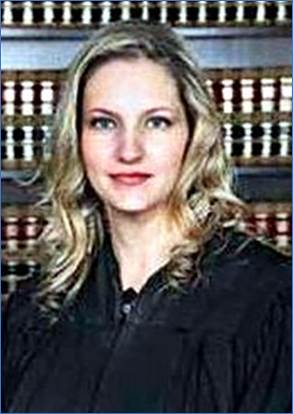
The blanket affidaviting of a judge by the San Joaquin Office of County Counsel based on her scolding of a deputy in that department has resulted in the California Supreme Court yesterday revisiting its 1977 decision in Solberg v. Superior Court, declaring that Code of Civil Procedure §170.6, to the extent it requires a judge to step aside based on a declaration of prejudice even if made in bad faith, is no longer supportable.
For the Legislature to require that, Justice Joshua P. Groban wrote for a unanimous court, is a violation of the separation of powers. Superior Court judges have the power, he wrote, to inquire into the bases for attempts to disqualify them and may rebuff bids that are not based on a good-faith belief that they are biased.
The opinion comes in response to the contention of a conservatee that the affidavit of prejudice the County Counsel’s Office filed to yank Judge Erin Guy Castillo from his case must be dishonored because it was one of more 300 instances of that office using §170.6 to bar the judge from hearing conservatorship cases, evincing bad faith. San Joaquin Superior Court Judge Kristine A. Eagle ruled that Guy Castillo is, under Solberg, obliged to step aside, and the Third District Court of Appeal, also bowing to that authority, affirmed.
Mosk’s Opinion
In Solberg, Justice Stanley Mosk (now deceased), writing for the majority, said:
“We conclude that to the extent that abuses persist in the utilization of section 170.6 they do not, in our judgment, ‘substantially impair’ or ‘practically defeat’ the exercise of the constitutional jurisdiction of the trial courts. Rather, it may be helpful to view them as a relatively inconsequential price to be paid for the efficient and discreet procedure provided in section 170.6.”
He continued:
“The statute thus remains a reasonable—and hence valid—accommodation of the competing interests of bench, bar, and public on the subject of judicial disqualification. We do not doubt that should future adjustments to this sensitive balance become necessary or desirable, the Legislature will act with due regard for the rights of all concerned.”
Risk of Interference
Groban observed that “the number of alleged challenges to Judge Guy Castillo in her specialized assignment supports our conclusion that blanket abuses of section 170.6 pose a clear and unacceptable risk of interfering with court operations,” remarking:
“The judiciary should no longer be helpless to remedy the problem of blanket abuses.”
While noting that “[w]e do not lightly depart from our own precedent,” the justice wrote:
“[W]e can no longer endorse Solberg’s logic to immunize blanket challenges under section 170.6 from judicial inquiry when such challenges threaten the separation of powers. We therefore overrule Solberg’s reasoning to the extent it bars a court from entertaining as-applied challenges to alleged blanket abuses of section 170.6 on separation of powers grounds.”
He set forth the procedure to be utilized by trial judges in acting on §170.6 challenges. There must first be a “prima facie determination” as the motivation for the challenge, Groban said, explaining: “Among the factors that may be considered in making this prima facie determination are whether the party has lodged persistent strikes against the same judge in all or a substantial portion of cases assigned to that judge, or all or a substantial portion of cases of a particular type. Such a showing may alone be persuasive in establishing a prima facie case of a bad faith blanket policy.”
Other factor that might be taken into account are numerous, the jurist noted.
He went on to say:
“In the absence of a prima facie showing that a party’s challenge to a particular judge is based on a bad faith blanket policy, the section 170.6 motion must be granted without further inquiry.”
Quoting from a 1990 Illinois Supreme Court case, he said that if “a prima facie case is found to exist, a hearing shall be conducted as soon as possible before a judge other than the judge named in the motion.”
The burden then shifts to the party seeking a disqualification to justify the challenge, the jurist wrote, saying:
“This means that the judiciary may now look behind the section 170.6 affidavit or oral statement and inquire into the basis for the party’s challenges.”
Groban spelled out:
“In other words, if after considering the proffered basis for the judge’s removal within the larger context of the overall pattern of strikes against the judge, the judge finds the section 170.6 motion to have been made in bad faith, the trial court should deny the motion and the case will remain with the judge named in the motion. If the trial court finds the party’s allegations of prejudice to be made in good faith, it must grant the motion and reassign the case to a different judge than the judge named in the motion.”
Changes in the court system since 1977 require a fresh look at the question presented in Solberg, Groban said. He provided this analysis:
“Today, California’s superior courts look much different than they did nearly five decades ago, and blanket abuses of section 170.6 can now have an outsized impact on the judiciary’s duty to effectively administer justice. Superior court case filings have significantly increased; for instance, in 1977, there were 54,653 felony criminal cases filed, whereas in the 2023 to 2024 fiscal year, there were 179,821 criminal felony filings….In the midst of growing operational demands, the judicial branch has also been hampered by budget cutbacks. Additionally, the superior courts have been impacted by judge shortages. As the Legislature recently recognized, ‘judicial need’ exceeds the number of superior court judgeships….In Riverside County, judicial shortages led to the dismissal of hundreds of criminal cases…..”
Groban continued:
“These stressors all combine to create a situation that is very different from the one facing the Solberg court: today’s court system handles a vast increase in case filings. But though the complexity of managing that system has increased, that system must navigate serious budget pressures and judicial shortages. In such a delicate judicial ecosystem, the impact of blanket abuses of section 170.6 to fundamentally alter judicial assignments becomes amplified. When a party utilizes section 170.6 to engage in the bad faith practice of removing a judge from all or a substantial portion of cases, or all or a substantial portion of cases of a particular type without a legitimate belief in the judge’s prejudice toward the litigant, the court is forced to redistribute work amongst its limited judges at the cost of both judicial efficiency and independence across its entire caseload…..The court is busier and more under resourced than it was in 1977, making the impacts of blanket challenges far more severe.”
The justice added:
“There have also been countless changes in the law since 1977 that similarly require judicial specialization. Blanket abuses of section 170.6 can materially undermine the effort to assign judges to courtrooms who possess particularized knowledge and training regarding these changes.”
The matter was remanded to the Court of Appeal “to consider whether any further proceedings” in the conservatorship case “are necessary in light of our opinion.”
The case is J.O. v. Superior Court. 2026 S.O.S. 1437.
Copyright 2026, Metropolitan News Company