Thursday, May 21, 2026
Page 3
C.A. Says Uber Not Liable for Freeway Death of Allegedly Drunk Student Who Ditched Ride
Opinion Says Would Be ‘Unwarranted Extension of Liability’ to Hold Company on Hook for Accident That Occurred Miles From Where Ride Was Prematurely Cancelled
By a MetNews Staff Writer
|
|
|
STELLA YEH decedent |
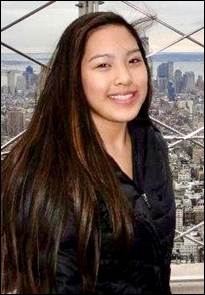
Div. One of the Fourth District Court of Appeal has held that summary judgment was rightly granted to Uber Technologies Inc. in a lawsuit accusing the rideshare company of negligence over the death of an allegedly intoxicated college student who had exited an operator’s vehicle prematurely on a side road four miles away from where she was eventually struck by vehicles on a San Diego freeway interchange.
Saying that the accident was too attenuated from any negligence in leaving the purportedly drunk passenger on the side of the road miles away from her designated destination, the court declared, in an unpublished opinion filed Tuesday, that it “would be an unwarranted extension of liability to hold Uber responsible” for the death.
Presiding Justice Judith McConnell, writing for the court, opined that the trial judge properly determined that there was an insufficient causal link between the decedent’s death and any actions or omissions by Uber contractors. She wrote:
“The legal issue before us is whether [the student’s] death from being struck by two vehicles on a freeway interchange that was miles from where she was left by the Uber drivers was within the scope of risk from Uber’s conduct based on public policy considerations….We conclude it was not.”
Act as Insurer
McConnell added:
“To hold otherwise would require rideshare companies such as Uber to act as an insurer for any harm suffered by a passenger who departs a ride anywhere other than the originally requested destination. Public policy cannot and does not compel such a result.”
The jurist also rejected the assertion by the plaintiff, the mother of the decedent, that the trial court made an improper credibility finding in rejecting a suggestion that it was reasonable to infer from the evidence that her daughter was forced out of the vehicle by the driver before she died as it was undisputed that the decedent had vomited in the car prior to her departure. She remarked:
“The court’s determination that it was not reasonable to draw such inferences from the evidence did not amount to a credibility determination. Rather the court concluded that McGarry’s argument was not reasonable because it was based on speculation.”
Scope of Liability
The question as to the scope of liability for the rideshare giant arose after University of San Diego student Stella Yeh got into an Uber vehicle in the early morning hours of May 11, 2018. She had been drinking at an off-campus party and had decided to return to her dorm alone after getting into an argument with some of her friends at a Pacific Beach fast-food restaurant.
According to evidence submitted in support of the summary judgment motion, the driver, Louvensky Geffrard, refused to let Yeh exit the ride on the freeway and offered to drive her back to the restaurant where he picked her up. She cancelled the ride request on the application and got out at a red light after he pulled off the interstate.
Yeh requested another ride but failed to respond when the second driver, Mark Rycz, arrived in the area and observed her sitting on an embankment. Somehow she managed to make her way four miles in under 30 minutes to another freeway interchange and was struck by two cars when she wandered into traffic lanes.
Following her death, Yeh’s mother, Josefina McGarry, filed a complaint against Uber on May 11, 2020, asserting causes of action including negligence, negligent training, and violations of the Tom Bane Act, which creates civil liability for the interference with a party’s constitutional or statutory rights through threats or coercion, based on a theory that Geffrard forcibly ejected the student from his car after she got sick.
In May 2024, San Diego Superior Court Judge Blaine K. Bowman granted Uber’s summary judgment motion. Yesterday’s decision, joined in by Justices Truc T. Do and Julia C. Kelety, affirms the defense judgment.
Proximate Causation
Pointing out that the question of proximate cause includes the consideration of the appropriate scope of liability based on public policy considerations, McConnell said:
“McGarry contends Uber’s conduct in leaving Yeh [on the side road] included a general risk that she could walk into traffic and be struck by a vehicle. Therefore, she argues, being struck by two vehicles on a freeway several miles away from where Yeh was dropped off should be considered within the general range of harm arising from Uber’s negligent conduct. We disagree.”
Saying that “[t]here was undisputed evidence that the first Uber driver did not allow Yeh to get out of the vehicle when she asked while they were on the freeway,” she remarked:
“Had [the driver] allowed her to get out of the car on the freeway, the scope of risk could have included the risk of injury from walking into freeway traffic. But that did not happen.”
Commenting that “[t]he sad truth is that no one knows how Yeh made her way from [the side road] to Interstate 805 where she died,” the jurist continued:
“The gap between any negligence of Uber and its drivers in leaving Yeh at Gilman Drive and her tragic death on a freeway miles away is too attenuated to hold Uber responsible.”
She added:
“McGarry nevertheless contends the range of harm from Uber’s conduct should include the risk that a bad actor could have picked up Yeh, could have transported her several miles away to another freeway interchange, and could have left her on the side of the freeway where she could wander into traffic and be struck by vehicles. This is a speculative bridge built too far on too many ‘could haves.’ ”
The case is McGarry v. Uber Technologies Inc., D084711.
Copyright 2026, Metropolitan News Company