Friday, May 15, 2026
Page 3
Court of Appeal:
Lawsuit Alleging Utterances of False Allegations Not a SLAPP
Justices Say Rebel Wilson Might Be Held Liable Based on Her Allegations, Made Publicly, That Co-Producers, Executive Producer of Film Engaged in Sexual Harassment of a Starring Actress, Embezzled Monies
By a MetNews Staff Writer
|
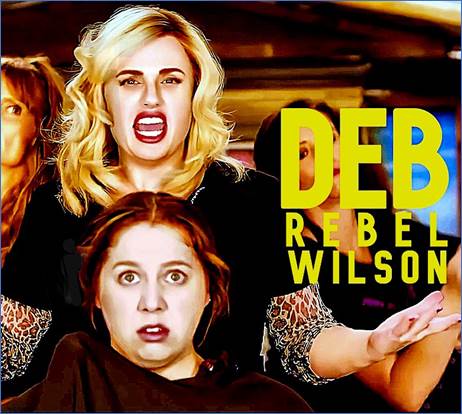
The Court of Appeal for this district has held that a Los Angeles Superior Court judge correctly denied an anti-SLAPP motion brought by Australian actress/director/producer Rebel Wilson in an action against her for defamation brought by three financiers of a movie she directed, two of whom she publicly accused of sexually harassing a star of the film and embezzling money.
Justice Mark Hanasono authored the unpublished opinion, filed Wednesday, affirming an order by Judge Thomas D. Long.
Suing Wilson over comments by her in a video on Instagram and in a demand letter that was made public are Amanda Ghost, Gregor Cameron, and Vince Holden. Ghost and Cameron are co-producers with Wilson of the 2024 Australian musical, “The Deb,” and are two she accused of harassing one of the denial film’s lead actresses, Charlotte MacInnes, and pocketing 900,000 Australian dollars, the equivalent of $652,905 in U.S. currency.
Holden was an executive producer.
Wilson, who also plated a part in the movie, alleged in her video and in the letter that all three attempted to sabotage plans to have the film make its debut on the closing night of the Toronto International Film Festival (“TIFF”), viewed in the industry as an honor.
Content of Letter
The demand letter says:
“1) Ms. Ghost and Mr. Cameron embezzled 900,000 Australian Dollars from the Film: 2) Ms. Ghost and Mr. Cameron have a pattern and practice of embezzlement, including on other projects: 3) Ms. Ghost and Mr. Cameron sexually harassed a lead actress of the Film: 4) Ms. Ghost and Mr. Cameron maintained coercive control on a lead actress of the Film and forced her to engage in depraved sexual demands; 5) a lead actress of the Film is being held captive by Ms. Ghost and Mr. Cameron, and is being taken across state lines; 6) Mr. Cameron used physical aggression to bully Rebel, and wrongfully imprisoned her.”
Long found that Wilson’s special motion to strike under Code of Civil Procedure §425.16 fails meets the anti-SLAPP statute’s first prong: a showing that protected conduct, stemming from the exercise of First Amendment rights in connection a public issue, is at the root of the lawsuit. Consequently, he did not proceed to consider the second prong.
Protected Conduct Found
Hanasono, while agreeing that an anti-SLAPP motion does not lie, rejected Long’s view that the conduct alleged in the pleading is not protected, but concluded that that the plaintiffs carried their burden under the second prong by establishing a probability of prevailing on the merits. Addressing the first prong, he wrote:
“Plaintiffs argue that the statements in the Instagram video and the demand letter are disconnected from any matter of public concern because the public had previously expressed no interest in the film’s finances or its producers. By focusing on one aspect of the video, plaintiffs improperly ignore the larger context….Wilson began and ended her video by announcing that the film might not premiere at the TIFF. And the demand letter provided further context for the dispute that led to this potential cancellation.”
The justice noted that “Wilson’s statements also described a private dispute between Wilson and the producers of the film, which in part related to the film’s finances.” He said, however, that it is it is necessary to adhere to the California Supreme Court’s admonition in its 2019 decision in FilmOn.com Inc. v. DoubleVerify Inc. to look “at the broader context” of the communication in issue to determine “through that context whether the company’s conduct qualifies for statutory protection by furthering the public conversation on an issue of public interest.”
Doing so, including considering “subsequent media coverage focusing on the public consequences of the parties’ private dispute,” Hanasono said the first prong of the statute is satisfied.
The film was shown at the TIFF.
Probability of Success
As to the second prong, Hanasono recited Wilson’s allegations against the plaintiffs and declared:
“Plaintiffs submitted declarations averring that these accusations are all false. Machines also declared that the statements relating to her are untrue. We must credit these declarations, and we conclude that they are sufficient to establish a prima facie case of falsity.”
The jurist went on to say:
“In a defamation case, a plaintiff who is a public figure must plead and provide evidence that the defendant acted with actual malice….Wilson argues that plaintiffs are public figures; plaintiffs assert that they are not. We need not resolve this dispute. Even assuming that plaintiffs are public figures, we conclude that they pleaded and made a prima facie showing of actual malice.”
MacInnes’s Statements
He explained:
“Here, Wilson accused plaintiffs of acting inappropriately towards, sexually harassing, coercing, and imprisoning Maclnnes. Maclnnes submitted a declaration averring that these statements are not true. More importantly. Maclnnes declared that she told Wilson twice in late 2023—several months before the Instagram video was posted—that Maclnnes did not feel harassed by Ghost, and that she felt ‘completely comfortable’ around Ghost ‘at all times.’ This evidence supports that Wilson knew, or had reason to believe, that her statements about Maclnnes were likely untrue.”
So far as Wilson’s allegation that Ghost and Cameron “diverted AU$900,000 from the film’s budget, Hanasono noted that evidence was put forth that Wilson participated in the decision to make changes in the budget.
He added that Wilson’s comments in the video and in the letter “appear to be at least partially motivated by hostility toward plaintiffs,” pointing to the harshness of the wording.
The case is Ghost v. Wilson, B342756.
Copyright 2026, Metropolitan News Company