Monday, June 8, 2026
Page 3
Ninth Circuit:
No Immunity for Officers in Case Brought by Exonerated Man
Opinion Says Judge Rightly Found That Two Retired Inspectors Could Not Avoid Liability on Claims That They Coerced Witness Statements Against Plaintiff, Who Was Freed After 30 Years in Prison, Drawing Dissent
By a MetNews Staff Writer
|
|
|
JOAQUIN CIRIA plaintiff |
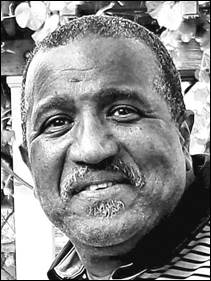
A divided Ninth U.S. Circuit Court of Appeals held Friday that two retired homicide inspectors were not entitled to qualified immunity relating to claims filed by a man who was released after serving 32 years in prison based on new evidence in the form of declarations, submitted in support of a petition for habeas corpus, by close confidants of the prosecutors’ star witness who said that the accuser had revealed that he lied under pressure from the officers.
Seeking to hold the inspectors responsible was Joaquin Ciria, who had been convicted of the 1990 murder of Felix Bastarrica in San Francisco. Eyewitnesses were unable to conclusively identify the shooter, but other individuals told officer that the “word on the street” was that Ciria fired the fatal shots.
Retired San Francisco Police Department Inspectors Arthur Gerrans and James Crowley interviewed 18-year-old George Varela, who the officers identified as the likely getaway driver on the night of the shooting, telling him, without giving Miranda warnings:
“You’re the one that’s either in the hot seat. You’re going to either be involved in this or not involved with this…. You’re either there involved in it as a suspect, or you’re just there as an innocent party who happened to be there.”
After Varela responded, “I don’t know how I’m supposed to even try to cover up” and “I damn sure I don’t want to go to the can,” they told him a story that insulated the witness from liability and he agreed, commenting “whatever you said” and giving a vague description of the night-in-question that did not mention Ciria by name.
Ciria was convicted after a trial at which Varela, who had been offered immunity in exchange for his testimony, was the star witness. In April 2022, San Francisco Superior Court Brendan Conroy partially granted his habeas petition and overturned the conviction based on the new evidence, with the support of the San Francisco District Attorney’s Office, which had determined that he was “factually innocent.” Prosecutors then moved to dismiss all charges.
Complaint Filed
In November 2022, Ciria filed a complaint against Gerrans and Crowley, among others, asserting constitutional claims under 42 U.S.C. §1983 relating to charges of fabrication of evidence and malicious prosecution.
Senior Circuit Judge Richard A. Paez authored Friday’s opinion, joined in by Senior Circuit Judge Mary M. Schroeder, affirming an order by U.S. Magistrate Judge Kandis A. Westmore of the Northern District of California, denying summary judgment to Gerrans and Crowley. Remarking that “Ciria has…presented evidence from which a jury could reasonably conclude that Defendants used coercive…tactics…to fabricate evidence against Ciria, Paez said:
“Taking the facts…in the light most favorable to Ciria, Inspectors Crowley and Gerrans threatened an 18-year-old who was at the murder scene into adopting a story naming Ciria as the shooter; the inspectors made their story attractive by telling Varela exactly what he needed to say to avoid liability; Varela did not feel free to leave the interrogation; he was evidently going along with their version of events to avoid a murder charge; and there was minimal objective evidence that Ciria was the shooter at the time of the interrogation.”
Dissenting, Circuit Judge Eric D. Miller asserted:
“I agree that if Valera had been coerced into giving a false statement implicating Ciria, that would violate the Fourteenth Amendment. But whether Valera was coerced into adopting the story fed to him by police depends on the interrogation tactics that preceded Valera’s admission. To prevail, he needs to show that those tactics were unconstitutionally coercive.”
Coercive Techniques
Noting that fabrication of evidence claims may be based on interrogation techniques that are so coercive that officers should know that they might lead to false information if there is some evidence of dishonesty, Paez opined that “[the defendants] faced numerous indicia that Varela was not providing a truthful account of what happened but was merely repeating what the inspectors wanted him to say” and “adopted the story [they] fed him.”
Pointing out that the officers never attempted to corroborate the alibi Ciria provided or the story Varela gave them, the judge further reasoned:
“[A] jury could reasonably find facts that would make Ciria’s fabrication-of-evidence claim even stronger. As the district court noted, Varela, at only 18 years old, was a teenager who was at the scene of the murder, making an adult murder charge with a life sentence especially daunting….By withholding Miranda warnings from him, a jury could reasonably conclude that the inspectors increased the pressure on Varela to agree with whatever they said, as Varela was not made aware of his right to remain silent or to speak to an attorney in the face of their interrogation.”
Clearly Established Right
Rejecting the view that the officers cannot be said to have violated a clearly established right as required to deny them qualified immunity because “many of the techniques the inspectors used were constitutional under the Fifth Amendment and Fourteenth Amendment standards for involuntary confessions,” he wrote:
“Whether officers violated someone’s constitutionally protected right against self-incrimination is a separate question from whether they used coercive or abusive tactics to elicit a fabricated statement against someone. The latter is the essence of a fabrication-of-evidence claim.”
Adding that “[e]ven if it were not obvious, an array of Supreme Court cases confirm Ciria’s constitutional right not to be charged with deliberately fabricated evidence,” he declared:
“[A]ny reasonable officer would know that threatening a young witness and offering him a story that insulates him from liability to get him to falsely implicate a suspect violates the accused suspect’s due process rights.”
As to the malicious prosecution claim, Paez wrote:
“[R]umor and suspicions not based on objective evidence, an imperfect match to a general physical description, some circumstantial evidence linking the suspect to the crime but no physical evidence, and a failed identification from a key witness. These circumstances did not establish probable cause….”
Miller’s View
Miller wrote:
“Joaquin Ciria spent many years in prison based on a murder conviction that has now been vacated, so it is natural to think that he should be compensated. But this case does not present the abstract question whether Ciria is entitled to some form of compensation. Instead, it presents a more specific legal question: whether James Crowley and Arthur Gerrans, the two police officers who investigated Ciria, are subject to liability under 42 U.S.C. § 1983 for fabrication of evidence and malicious prosecution.”
Saying that “[t]he Supreme Court has ‘repeatedly told courts—and the Ninth Circuit in particular—not to define clearly established law at a high level of generality,’ ” he argued:
“Both of Ciria’s claims fail because, even assuming that the officers violated Ciria’s constitutional rights, Ciria cannot show that the relevant rights were clearly established at the time of the investigation in March 1990. I would therefore reverse the district court’s order denying the officers’ motion to dismiss.”
Describing the investigative tactics as “standard interrogation methods,” he opined:
“[T]his is hardly a case in which the constitutional violation was ‘obvious’ at the time….Notably, the coerciveness of the interrogation was not obvious to Ciria’s lawyer, who had access to the entire transcript of Varela’s interrogation—including all of the exchanges that the court today uses…—but concluded that it would not be helpful to present any of it to the jury at Ciria’s criminal trial.”
The case is Ciria v. Gerrans, 24-3308.
Copyright 2026, Metropolitan News Company