Wednesday, May 20, 2026
Page 1
LASC Judge Susan Bryant-Deason Draws Public Scolding Over Voir Dire Remarks
By a MetNews Staff Writer
|
|
|
SUSAN BRYANT-DEASON
|
|
|
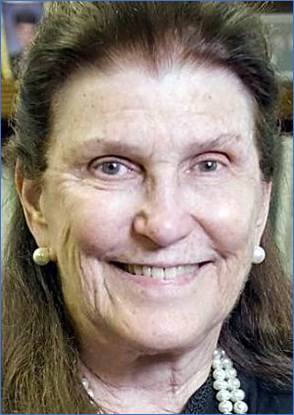
Longtime Los Angeles Superior Court Judge Susan Bryant-Deason yesterday drew a public admonishment from the state’s judicial disciplinary body for the “rude and discourteous” treatment of two potential jurors with limited English skills, having told one that “you’re not doing anything in our society” and advising another that “you should be very thankful” for U.S. citizenship and ought to “learn English.”
In yesterday’s order, the Commission on Judicial Performance (“CJP”) acknowledged that Bryant-Deason, a graduate of Southwestern School of Law who has served on the bench since 1995, has a clean disciplinary record but said:
“In determining to issue this public admonishment, the commission acknowledges Judge Bryant-Deason’s 30 years of service on the bench, her contributions to the judiciary, and her lack of prior discipline….Judge Bryant-Deason’s remarks, however, regardless of her intent, were of a nature to undermine public confidence in the integrity and impartiality of the judicial system.”
The commission was similarly unmoved by the fact that the remarks were made during a 10-day jury selection process in the Jogani v. Jogani case, a hotly-contested sibling dispute over ownership interests in a real estate portfolio and a diamond business in which the judge ordered entry of judgment against one of the brothers, Haresh Jogani, for an aggregate of nearly $7 billion in May 2024.
In February, Div. One of this district’s Court of Appeal directed the prevailing parties to either agree to a nearly $2 billion reduction or face a new trial.
CJP commented:
“The fact that the matter before a judge is difficult…does not absolve a judge from their obligations under the canons to refrain from language that is rude and discourteous or creates an appearance of bias or prejudice.”
Prospective Jurors
Bryant-Deason’s remarks were made to two Chinese immigrants who appeared for jury service on the Jogani case in September 2023. Each of the prospective jurors had been in the U.S. for more than 20 years.
During questioning aimed at determining whether the parties had sufficient command of the English language to serve, she asked one, “Why did you want to come here and live?” and added:
“You don’t speak English. You’re not doing anything in our society. You can’t be on a jury. What are you doing? What are you doing here?”
When making inquiries of the second prospective juror, she asked if she had “ever thought about taking an English class” and remarked:
“I think it might be a good idea. I don’t think your English is quite good enough for this jury. Thank you for coming and for having the privilege of being in the United States as an American Citizen and being able to serve on a jury. You should be very thankful. Learn English.”
Statement of Disqualification
On Feb. 15, 2024, Haresh Jogani filed a statement of disqualification under Code of Civil Procedure §§170.1(a)(6)(A)(iii) and 170.1(a)(6)(B) against Bryant-Deason based, in part, on the questioning of the two prospective jurors.
That April, Orange Superior Court Judge Cheri Pham denied the statement, opining that the comments to the potential panelists were “insensitive” but saying:
“A person aware of all the facts would not reasonably entertain a doubt that Judge Bryant-Deason would be able to be impartial in this proceeding. Nor have the Haresh Defendants offered any evidence to show that Judge Bryant-Deason is biased or prejudiced against a party or attorney in this proceeding.”
Rejecting Bryant-Deason’s assertion that the denial of the statement of disqualification precluded any finding that the judge had engaged in misconduct, the commission reasoned:
“The fact that Judge Pham made a finding that Judge Bryant-Deason was not biased against a party is not incompatible with the commission’s conclusion that [she] violated the canons by engaging in speech towards two potential jurors that was rude and discourteous and could reasonably be perceived as reflecting bias or prejudice.”
Fully Grasp
Adding that, “[w]hile Judge Bryant-Deason acknowledged that her remarks were insensitive, she did not appear to fully grasp that her remarks created the appearance of bias or prejudice against the potential jurors whom she viewed as taking advantage of the ‘privilege’ of being citizens,” CJP continued: “Judge Bryant-Deason had a duty to inquire into the potential jurors’ knowledge of the English language.
The duty to make such an inquiry did not, however, lessen her duty to ensure that her remarks to prospective jurors were courteous and dignified and did not create an appearance of bias or prejudice.”
Eight members of the commission voted in favor of the public admonishment.
Los Angeles Superior Court Judge Lisa B. Lench and another commissioner were recused, and a third member did not participate in the decision.
★★★★★
Judge Bryant-Deason Responds Through Counsel
Through her counsel, Miller Waxler LLP, Bryant-Deason issued the following statement in response to yesterday’s CJP’s decision:
Judge Bryant-Deason has faithfully served the people of Los Angeles as a Superior Court Judge since her election in 1995. Over the following thirty-one years, Judge Bryant-Deason has remained deeply committed to the integrity, impartiality, and accessibility of the courts for every member of the public—and dedicated to fairness for every participant in the judicial system. She has been recognized as a Judicial leader and willing to take on the toughest cases and most challenging assignments. Judge Bryant-Deason has never been the subject of any form of discipline. In all—a sterling record of leadership, achievement, and devoted public service.
The case the CJP chose to investigate Judge Bryant-Deason’s handling was exceptional for many reasons. It was a case that had been in the Los Angeles Court system for over twenty years, on appeal nine times over fifteen years, and presided over by four trial Judges before her. It involved a family of feuding parties with billions of dollars at stake. Trial was estimated to take five months, which meant the jury screening and selection process would itself take weeks. Eventually, 400 prospective jurors would need to be questioned and qualified. Despite that, Judge Bryant-Deason volunteered, no questions asked, to serve as the trial Judge. Judge Bryant Deason showed up daily, week after week, month after month, until the jury reached a decision five months later. Recently, the Court of Appeal largely affirmed the verdict—signifying an adept handling by a deeply committed, balanced and highly experienced trial Judge.
The CJP’s Public Admonishment reaches all the way back to the jury impaneling process, and critiques Judge Bryant-Deason’s discussion with two prospective jurors out of 400. The discussions with the jurors make up fifteen lines in a case record that fills an entire downtown conference room. The remarks…center around the prospective jurors’ professed inability to write or understand English, which they each disclosed on their juror questionnaire. Understanding and writing in English is statutorily required by California law. It is the trial judge’s obligation to ensure it. Otherwise, it is unfair to the litigants and to the jurors themselves. This is a very familiar process for judges overseeing California jury trials—many entertain this same process daily, to attempt to intuit a juror’s proficiency. Yet, in admonishing Judge Bryant-Deason’s remarks as prejudicial and biased, the CJP got it backwards—she was trying to impanel a jury reflective of California’s diverse population and to ensure a fair trial. Indeed, the seated jury (and alternates) included five Asian Americans, four African Americans, two Filipinos, seven Hispanics, and four Caucasians. Not one juror, or alternate, was lost in five months. As conceded by the CJP, in a final ruling by another judge evaluating the case, the allegation of prejudice against Judge Bryant-Deason ‘was not borne out by the record.’ That should have ended it.
Judge Bryant-Deason recognizes that her phrasing of the questions to the two jurors in question may, in hindsight, have been better expressed. However, she firmly rejects any suggestion that she acted with bias or prejudice in encouraging a citizen to learn English or noting that it is a privilege to live in the United States and be able to serve on a jury—neither was the product of intemperance or prejudice but were intended as encouragement. Her objective throughout was to apply California law faithfully and to ensure a fair trial to all parties before a diverse and representative jury.
Judge Bryant-Deason looks forward to continuing the honor and privilege of serving the public.
Copyright 2026, Metropolitan News Company