Wednesday, April 22, 2026
Page 3
Court of Appeal:
Action Over Police Shooting of Veteran With Knife Is Revived
Opinion Says Trial Judge Erred in Focusing Too Much on Decedent’s Charging at Officer With Weapon Seconds Before Shots Fired in Granting Summary Judgment Without Looking to Pre-Shooting Conduct for Context
By Kimber Cooley, associate editor
|
|
|
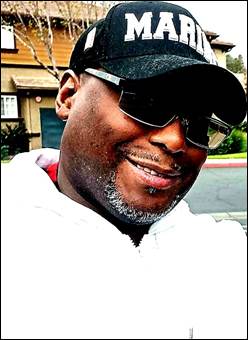
CHARLEY McMURTRY decedent |
Div. One of the Fourth District Court of Appeal has resurrected an action over a fatal police shooting that resulted in the death of a veteran who charged at an officer with a knife in his hand in the middle of traffic on the Interstate 10 freeway while purportedly suffering a mental health crisis.
Saying that the trial judge erred in focusing too much on the moments before shots were fired, rather than considering the conduct leading up to the incident, in granting summary judgment, the court opined that triable issues of fact remained as to the reasonableness of the shooting.
Presiding Justice Judith McConnell authored Monday’s unpublished opinion, joined in by Justices Martin N. Buchanan and David M. Rubin, reversing the defense judgment. She declared:
“The standard employed by the trial court was not the proper one. It focused too narrowly on the seconds before [the decedent] was shot, rather than the totality of the circumstances….The plaintiffs were required to show, and did show, that a dispute remained as to whether [the firing officer] acted reasonably when he failed to communicate with the other responding police officers before attempting to apprehend [the decedent], and by immediately exiting his car and pointing his weapon at [the veteran], who [the officer] knew was in the midst of a severe mental health crisis.”
Wrongful Death Complaint
Appealing the judgment was Ann McMurtry, who filed a complaint on behalf of herself and her minor child, against the California Highway Patrol (“CHP”) in July 2021 relating to the fatal shooting of her husband, U.S. Marine Corps veteran Charley McMurtry, on Feb. 5, 2021. The plaintiffs asserted causes of action for wrongful death, negligence, and a violation of the Unruh Civil Rights Act, among other claims, and sought $15 million in damages.
In the complaint, Ann McMurtry alleged that she was driving on the freeway in Rialto when her husband, who was sitting in the passenger seat, began to talk about his military experiences. According to the plaintiff, he suffered from post-traumatic stress disorder and had recently been released from the hospital following two suicide attempts.
Ann McMurtry said that her husband suddenly pulled out a two-to-three-inch paring knife and cut his wrists and throat, prompting her to pull over on the shoulder. She immediately called 911 after he jumped out of the car.
Three California Highway Patrol officers, James Farner, Jesus Garcia, and Michael Migliacci, responded to the call. They spoke with Ann McMurtry before they located her husband walking on the freeway, holding a knife.
Gun Drawn
Farner got to him first, exiting his patrol car and approaching with his gun pointing at the suspect. Charley McMurtry charged Farner, who fired three shots and killed the veteran; Migliacci arrived seconds later and was holding a taser as he ran toward the scene.
After CHP filed a motion for summary judgment, the plaintiffs opposed the request, conceding that Farner acted reasonably in the final seconds before the shooting but arguing that triable issues of material fact remained as to whether Farner’s decision to immediately approach Charley McMurtry with a firearm provoked the veteran into charging or trying to commit a “suicide by cop.”
On Aug. 15, 2024, San Bernardino Superior Court Judge Gilbert G. Ochoa granted the CHP’s motion for summary judgment, concluding that the use of deadly force was reasonable as a matter of law and that no juror could conclude otherwise under the circumstances.
Preshooting Conduct
Saying that “peace officers have a duty to act reasonably when using deadly force,” McConnell pointed out that the “preshooting conduct” of law enforcement members is included in the totality of circumstances relevant to the determination of whether they acted unreasonably.
In a footnote, she clarified:
“The CHP asserts the appellants[]…improperly apply ‘the more-stringent standard for the use of deadly force in imminent self-defense...to the non-deadly preshooting conduct that appellants challenge….’ The CHP also states, ‘…[P]roper pre-shooting conduct cannot undermine the justification for an otherwise reasonable shooting.’ We do not agree with the CHP’s characterization of the appellants’ argument. Appellants concede only that in isolation Farner’s shooting was justified and they do not argue that liability attaches only to the pre-shooting conduct.”
Finding noteworthy that the other two officers testified that they had non-lethal weapons at hand when arriving at the scene, a taser and a beanbag shotgun, she opined that “[t]his evidence contradicts the CHP’s assertion that there was no dispute about the need for lethal force” and that “even if the shooting was justified in isolation, the trial court was required to consider the totality of the circumstances.”
The jurist remarked:
“We are well aware of the stress and difficulties faced by law enforcement responding to dangerous situations like the one presented here, and do not take the decision to reverse summary judgment lightly. However, on these facts, the CHP did not establish as a matter of law that Farner acted reasonably. Rather, it is appropriate for the jury to consider the totality of the circumstances surrounding the shooting to make this determination.”
The case is McMurtry v. California Highway Patrol, D087165.
Copyright 2026, Metropolitan News Company