Friday, January 16, 2026
Page 3
Court of Appeal:
Third-Party Gag Order Was Properly Imposed on Microsoft
Opinion Says Prohibition by Superior Court Judge on Telling Contact at USC of Search Warrant for Data Related to Email Account of Student Suspected of Multiple Rapes Did Not Abridge University’s First Amendment Rights
By a MetNews Staff Writer
|
|
|
SIZHE WENG |
|
|
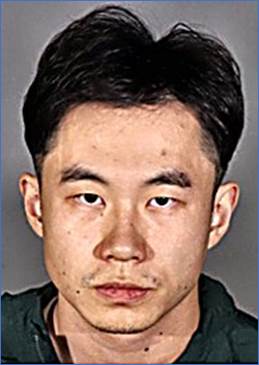
The Court of Appeal for this district has held that a Los Angeles Superior Court judge properly imposed a third-party gag order on Microsoft, commanding it not to divulge to anyone connected with the University of Southern California that it was under compulsion of a search warrant to disclose electronic data in connection with the email account of a graduate student suspected of raping three women after drugging them.
Microsoft did not protest the order to the extent that it forbade tipping off the suspect, Sizhe Weng (also known as Steven Weng), but insisted that the nondisclosure order (“NDO”) was too broad to survive strict scrutiny under the First Amendment. In particular, it wanted to convey to a trusted contact at USC that such a search warrant had been served on it, maintaining that if it did not reveal the identity of the student, the investigation by the Los Angeles Police Department would not be compromised.
“Microsoft’s proposal that the trial court limit disclosure to a trusted person at USC is unworkable,” Justice Armen Tamzarian of Div. Four said in Wednesday’s opinion. “The government and the trial court cannot be expected to vet that person or assess the risk that he or she will keep the information.”
Div. Four exercised its discretion to decide the controversy notwithstanding mootness. Weng was arrested last Aug. 28 and the NDO was lifted by Judge Craig Richman a few days later.
First Impression
Tamzarian wrote:
“This case involves a fact pattern that has not been addressed in any California published opinion: When the government serves a search warrant on an electronic service provider seeking information about the target of a criminal investigation, under what circumstances may the trial court issue a nondisclosure order…prohibiting the provider from disclosing the existence or contents of the warrant to third parties, including its customers?”
He went on to say: “Microsoft does not dispute that the City’s proffered compelling interest—protecting the integrity of an ongoing criminal investigation involving serious and violent felonies—is a compelling government interest…. The only remaining issue, then, is whether the NDO is also narrowly tailored. We conclude that it is.”
This discussion was provided:
“We agree with the City that USC had an incentive to conduct its own investigation into any allegation of serious crimes committed by one of its students. USC’s interests do not necessarily align with the government’s investigative interests. For example, USC had an interest in risk management and protecting its reputation, issues the government is not concerned with.
“Moreover, as the trial court recognized, USC is not subject to the NDO, and the court does not have jurisdiction over USC. Thus, although perhaps unlikely, there is nothing prohibiting USC from leaking or inadvertently disclosing the existence of the warrant to third parties, including directly or indirectly the target of the investigation (which Microsoft admits would lead to adverse results). We decline Microsoft’s invitation to simply ‘take their word for it’ that the “trusted” contact at USC would keep the existence of the warrant confidential. The stakes are too high—even if the risk is low—given the ongoing criminal investigation into multiple alleged rapes committed by a suspect who is a foreign national from a nonextradition country.”
Privacy Legislation
Also contended by Microsoft was that requirements of the California Electronic Communications Privacy Act were not met. Tamzarian noted that the investigating detective’s sealed affidavit, considered by Richman, is not a part of the record on appeal, so that it is impossible to consider Microsoft’s assertion that there is no reason to suppose that informing persons at USC of the search warrant would have adversely affected the investigation then in progress.
“Microsoft’s speculation is not sufficient to meet its burden of affirmatively demonstrating trial court error,” the justice wrote.
The case is Microsoft v. Superior Court (City of Los Angeles), 2025 S.O.S. 157.
James R. Sigel, Alexander F. Porter, Ambika Kumar, MaryAnn T. Almeida, and Shontee M. Pant of Davis Wright Tremaine represented Microsoft. Los Angeles Deputy City Attorneys Hasmik Badalian Collins and Soraya Kelly acted for the city.
Weng was arraigned on Sept, 2 and pled not guilty. He was denied bail in light of being a national of China, with which there is no extradition treaty, and the high prospect of flight.
Deputy District Attorney Catherine Mariano of the Sex Crimes Division is the prosecutor.
Weng’s preliminary hearing was scheduled for last Wednesday but a problem arose in transporting him to court ad the matter was continued to Feb. 5 for preliminary hearing setting.
Copyright 2026, Metropolitan News Company