Wednesday, May 20, 2026
Page 1
Ninth Circuit:
Veterans Affairs Doctors Have No Heightened Duty of Care
By a MetNews Staff Writer
|
The Ninth U.S. Circuit Court of Appeals yesterday rejected the proposition that doctors at a veteran’s hospital should be subjected to a heightened standard of care in light of ex-soldiers being at a higher risk of committing suicide than the general populace, affirming a defense judgment in a wrongful death case brought by the parents of a man who served in the Army, experienced post traumatic stress disorder, and killed himself.
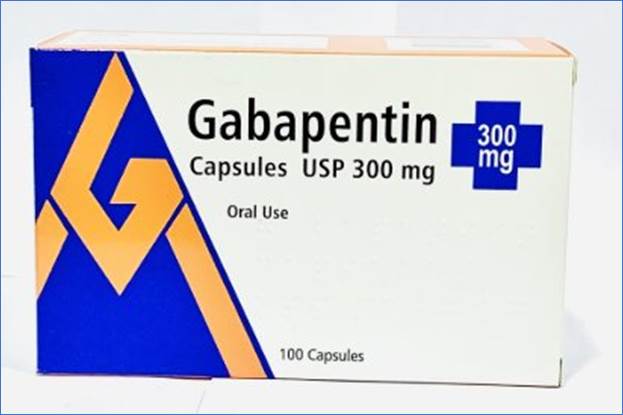
Decedent Carlos Sendejas Lopez Jr. on June 24, 2018, shot himself in the head after being placed on a pain drug, gabapentin, a month earlier by Department of Veterans Affairs (“VA”) doctors. Side effects of the drug include memory problems depression.
According to an Oct. 23, 2018 article in Surgical Neurology International, “cases have been reported of gabapentin-related suicidal acts and aggressive behavior.”
In a memorandum opinion—signed by Circuit Judges Michelle T. Friedland and Eric D. Miller, joined by District Court Judge Anne R. Traum of the District of Nevada, sitting by designation—the court affirmed a judgment, following a bench trial, awarded by Magistrate Judge Michael R. Wilner of the Central District of California in favor of the United States. The judges were unpersuaded by the argument that VA doctors have an elevated duty of care.
The usual standard under California law—that medical providers face no liability if they perform with the “degree of skill, knowledge, and care ordinarily possessed and exercised by members of their profession under similar circumstances”—applies, they declared.
Among other contentions by the appellants was that due process was breached by Wilner in disallowing impeachment of Dr. Christine Holland, a clinical psychologist, whose testimony at trial, they allege, contradicted what she said at her deposition.
Appellant’s Brief
Arguing for a reversal, attorney Yana Henriks of the downtown Los Angeles firm of McMurray Henriks LLP said the opening brief for Carlos Lopez Sr. and Juanita Lopez:
“Like many veterans, Carlos Jr. struggled with his mental health. After thirteen years of faithful service to his country, which included combat, Carlos Jr. was afflicted by Post Traumatic Stress Disorder…, and a traumatic brain injury. Knowing that veterans are at a much higher risk of committing suicide than the general population, and knowing that as United States Department of Veterans Affairs…staff, that they exclusively treat veterans, they could have and should have saved the life of Carlos Jr. on multiple occasions and their failure to do SO breached the standard of care required when treating a veteran like Carlos Jr. Veterans deserve our upmost care.”
Henriks continued:
“Veterans are known within the medical community and within the VA itself to be at higher risk of suicide than the general population….Dr. Holland testified to this fact, noting that ‘anybody walking in the door we’re assuming that they’re at an increased risk [of suicide].’…Inexplicably, the trial court did not consider this to be relevant to the standard of care. The trial judge misapplied the law by failing to consider the patient population and exceptional status that is expected of care at the VA when determining the standard of care.”
Ninth Circuit Opinion
Yesterday’s opinion responds:
“Plaintiffs presented expert testimony from Dr. Howard Greils. a psychiatrist, who concluded that the VA providers breached the standard of care. Dr. Greils testified to the standard of care for physicians prescribing gabapentin to patients with a history of mental health problems, as well as the standard of care for psychologists encountering a patient at a mental health clinic who reports symptoms similar to Lopez’s. The district court discounted Dr. Greils’s testimony because he is not a practicing neurologist and his proposed standard of care was not tailored to the walk-in clinic practice setting.
“Plaintiffs argue that the district court erred by failing to apply a heightened standard of care to VA medical staff. Plaintiffs reason that, because veterans are at higher risk for suicide. VA doctors should be held to a higher standard of care in evaluating and responding to risks of suicide. But plaintiffs identify no testimony from Dr. Greils or any other witnesses that would support a heightened standard of care for medical professionals who treat veterans. Dr. Greils testified that the VA providers should have paid more attention to risk factors specific to Lopez, but he never suggested that a higher standard of care applies to the VA patient population in general. Without expert evidence supporting the standard of care they propose, plaintiffs cannot show that the district court erred.”
The appellants argued that their son, after experiencing ill-effects from gabapentin, on June 19, 2019—five days before his death—saw Holland who spent only about half an hour with him, did not inquire as to what medications he was taking, and determined he was not a suicide risk. Their reply brief says:
“At deposition, Dr. Holland stated that Mr. Lopez told her he was shown videos of others committing atrocities….At trial, for the first time, she testified that Mr. Lopez said he was shown videos of himself committing atrocities—a deeply prejudicial and materially different claim….Not permitting Plaintiffs to address Dr. Holland’s new testimony was a clear violation of Plaintiffs’ due process rights and prejudiced their ability to challenge the credibility of a critical witness. “Had the trial court granted Plaintiffs’ counsel an opportunity to impeach Dr. Holland, the remaining record would have reflected that Dr. Holland alters her notes in patient’s medical records in a manner which drastically changes the importance of the note, and thus the effectiveness of the note for it’s intended purpose, accurately documenting Mr. Lopez’s health. Had Dr. Holland been impeached, the Court likely would have found that Dr. Holland did not adequately consult with Mr. Lopez, which led directly to him not receiving desperately needed treatment and then his death.”
The opinion sets forth:
“The district court did not abuse its discretion in preventing plaintiffs from attempting to impeach the VA psychologist with her deposition testimony. A district court is afforded a ‘high degree of flexibility’ in evaluating whether trial testimony is inconsistent with a witness’s prior statements….The court reasonably found that the psychologist’s trial testimony was not inconsistent with her deposition testimony.”
The case is Lopez v. U.S., 24-5529.
Copyright 2026, Metropolitan News Company