Friday, September 18, 2026
Page 1
Ridley-Thomas Petitions for Fresh Look at His Federal Bribery/Mail, Wire Fraud Convictions
Wants Rehearing by Panel That Affirmed Judgment or by Ninth Circuit, Sitting En Banc
By a MetNews Staff Writer
|
|
|
MARK RIDLEY-THOMAS former county supervisor |
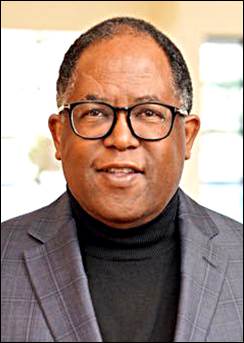
Mark Ridley-Thomas, who served as a member of the Los Angeles County Board of Supervisors from 2008-20 and was a suspended member of the Los Angeles City Council when he was convicted in 2023 on federal bribery charges has asked that the three-member panel that on Aug. 3 upheld the judgment grant him a rehearing or that the active members of the Ninth U.S. Circuit Court of Appeals, sitting en banc, decide the matter afresh.
His petition was filed Wednesday. The gist of it is that the panel—comprised of Circuit Judges Morgan B. Christen, Anthony D. Johnstone, and Johnnie B. Rawlinson—erred in finding that a jury was justified in finding that he garnered a “thing of value” in his arrangement with USC.
The scheme entailed the then-county lawmaker diverting $100,000 from his campaign funds to USC which then turned over the money to United Ways, a think-tank headed by Mark Ridley-Thomas’s son, Sebastian Ridley-Thomas. The son needed employment; he had resigned from the state Assembly in 2017 with sexual harassment investigations of him in progress.
Mark Ridley-Thomas on March 30, 2023, was convicted on one count each of bribery relating to federal funds and conspiracy and five counts of honest services mail and wire fraud in violation. On Aug. 28 of that year, he was sentenced by District Court Judge Dale S. Fischer of the Central District of California to three-and-a-half years in prison.
He is free on bail awaiting the outcome of his appeals.
Argument Presented
Wednesday’s petition for a rehearing sets forth:
“This case presents a question of first impression in this Circuit: in a federal bribery scheme, must the predicate ‘thing of value’ enrich the charged public official (or his designee)? Ample precedent dictates a clear answer: Yes. The panel reached the opposite conclusion, holding that the statutory term ‘thing of value’ includes anything to which a public official ascribes ‘subjective value,’ even reputational benefits that have no monetary value whatsoever…..That expansive holding creates a split with the Seventh Circuit (where neither ‘psychic’ benefits nor ‘political favors’ are things of value)…, and the First Circuit (where ‘professional benefits’ are not things of value)….”
The petition continues:
“Beyond creating an irreconcilable patchwork of liability across the Circuits, the panel’s opinion carries wide-ranging implications for public servants in this Circuit, who now face sweeping criminal liability that conflicts with Supreme Court precedent.”
It argues that the nation’s high court, in its 2010 decision in Skilling v. United States, “limited the scope of the honest services fraud doctrine to its historic ‘core’ ” which “involved the acceptance of financial rewards—including cash, commissions, and miscellaneous monetary perks—in exchange for official action,” declaring:
“Appellant, Dr. Mark Ridley-Thomas, derived no financial reward from his participation in the charged bribery scheme whatsoever. Nor did anyone else.”
Panel’s Decision
The panel’s Aug. 3 per curium opinion says:
“The service of funneling $100,000 from Ridley-Thomas to USC to United Ways for Sebastian’s benefit was a ‘thing of value’ sufficient to support Ridley-Thomas’s convictions for both honest services fraud…and federal program bribery….The Government presented sufficient evidence of intent and materiality, and the district court did not err in its jury instructions for either honest services fraud or federal program bribery. Because we affirm Ridley-Thomas’s convictions for honest services fraud and federal program bribery, we also affirm the conspiracy conviction.”
Other allegations were rejected by the jury. It was charged that Sebastian Ridley-Thomas was, under an arrangement, to receive admission to a USC graduate school, with his tuition fully covered by a scholarship, and that he be granted a paid teaching position, with the quid pro quo being the support of his father, while a supervisor, of the award of several lucrative county contracts to USC.
The case is U.S. v. Ridley-Thomas, 23-2200.
Representing Ridley-Thomas, 71, were Alyssa D. Bell, Michael V. Schafler, and Neil S. Jahss of the downtown Los Angeles law firm of Cohen Williams LLP, Paul J. Watford of King & Spalding LLP, also located in downtown Los Angeles, and Erwin Chemerinsky, dean of the UC Berkeley School of Law, a member of the Illinois and District of Columbia bars.
Copyright 2026, Metropolitan News Company