Wednesday, June 10, 2026
Page 3
Court of Appeal:
Hospitals Immune as to Post-Release Actions by Mentally Ill
In Case Over Suicide Committed Hours After Decedent was Released From Involuntary Hold, Opinion Says Statutory Liability Bar Applies Even if Facility Was Grossly Negligent
By a MetNews Staff Writer
|
|
|
ANTHONY SGARAGLINO decedent |
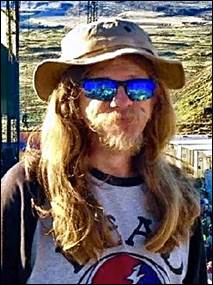
Div. Six of this district’s Court of Appeal has held that hospitals enjoy broad immunity from claims relating to actions taken by mentally ill patients after their release from an involuntary period of in-patient psychiatric treatment, rejecting the assertion by the parents of a man who killed himself hours after he was set free from a Ventura County hospital, over their protestations, that an exception exists for cases of gross negligence.
At issue is Welfare and Institutions Code §5113, which provides:
“[T]he facility providing treatment [and its employees] or the peace officer responsible for the detainment of the person shall not be civilly or criminally liable for any action by a person released at or before the end of the [statutory] period [of commitment].”
San Luis Obispo Superior Court Judge Craig Van Rooyen, sitting by assignment, authored the opinion, which was filed Monday but appeared on the California Courts website yesterday, saying:
“When to release a psychiatric patient from an involuntary commitment is a fraught decision. Recognizing the inherent tension between safety and freedom, the Legislature set time limits on involuntary detentions and immunized psychiatric facilities and the people who operate them from liability for release decisions. Here we hold that section 5113 immunizes hospitals and their operators for the actions of patients…after they are released.”
Suicide After Discharge
The question arose after Anthony Sgaraglino died by suicide approximately eight hours after he was discharged from an inpatient psychiatric unit of the Ventura County Medical Center in January 2023. His parents, Franklin and Linda Sgaraglino, filed a complaint the following year for wrongful death against the locality, asserting that the facility negligently released him after the initial three-day hold despite being on notice that he was suicidal.
They said that their son was sent home into their care with prescriptions for new medications, but without any actual pills, and that he hung himself inside their garage hours later. The county filed a motion for summary judgment, asserting that §5113 barred all claims, and submitted a separate statement of undisputed material facts as well as a supporting declaration.
In response, the Sgaraglinos submitted an expert declaration by Leslie Dobson, a clinical psychologist, who opined that the decedent should not have been released against the wishes of his family and without medication, citing his struggles with bipolar disorder and suicidal ideation. They did not file a responsive separate statement.
Ventura Superior Court Judge Benjamin F. Coats granted the motion on July 31, 2025, finding that §5113 covered any claim asserting that the facility’s treatment and release of Anthony Sgaraglino fell below the standard of care and that there is no authority to support the plaintiffs’ contention that an exception exists for cases of gross negligence.
Monday’s decision, joined in by Acting Presiding Justice Hernaldo J. Baltodano and Justice Tari L. Cody, affirms the defense judgment.
Immune From Liability
Saying that “[w]e agree with the trial court that respondent is immune from liability for releasing Anthony after his…involuntary detainment,” Van Rooyen noted:
“The Lanterman-Petris-Short Act ((§ 5000 et seq.; LPS Act) governs involuntary detainment of persons with mental illness. The Legislature enacted the LPS Act ‘to end the inappropriate, indefinite and involuntary commitment of mentally disordered persons…and to protect mentally disordered persons.’ ”
Characterizing immunity as “an important part of the LPS Act’s goal of ending the inappropriate, indefinite and involuntary commitment of mentally disordered persons,” he opined:
“Under section 5113, facilities providing treatment [to parties involuntarily detained] are immune from civil liability ‘for any action by a person released at or before the end of the period for which the person was admitted….’ Here, appellants seek damages against respondent for negligence and wrongful death on the theory that respondent discharged Anthony without medication and despite indications he was not safe to leave the hospital, causing him to take his own life. On its face, section 5113 protects respondent from liability for Anthony’s post-release actions.”
Gross-Negligence Exception
As to the parents’ call for an exception for cases of gross negligence, the jurist responded:
“The statute…contains no exception for gross negligence. ‘When the language of a statute is clear and unambiguous, there is no need for interpretation and we must apply the statute as written.’ ”
Applying the terms of the statute to the plaintiffs’ claims, he opined:
“Here, respondent demonstrated that a physician evaluated Anthony and determined he did not meet the criteria for [a further involuntary hold]. Since appellants failed to dispute this fact by filing their own separate statement, it is deemed established and they cannot now attack the validity of the release decision. In any event, Dr. Dobson’s declaration that the release decision did not meet the medical standard of care is irrelevant. That is the very type of argument foreclosed by section 5113’s immunity provision.”
He added:
“[E]ven if the treating psychiatrist ignored indications that Anthony was still dangerous to himself before he was released, this alleged negligence relates to the harm that followed from the timing of his release, not from harm that occurred during his treatment. It is, therefore, covered by section 5113’s immunity.”
The case is Sgaraglino v. County of Ventura, B348978.
Copyright 2026, Metropolitan News Company