Tuesday, June 16, 2026
Page 1
Court of Appeal:
Analyzing DNA Via Genealogical Databases Is Constitutional
Opinion Rejects Assertion That Conversion of Biological Materials Left at Crime Scene to Unique Profile Useable By Companies Offering Ancestry Data Is Something More Than Permissible Collection of Abandoned Property
By Kimber Cooley, associate editor
|
|
|
KEVIN KONTHER defendant |
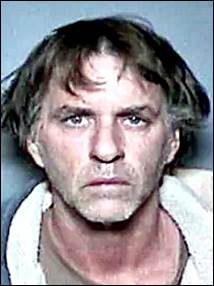
Div. Three of the Fourth District Court of Appeal has held that the conversion of biological materials recovered from a crime scene, which did not return any DNA matches when run through the FBI’s national DNA database, into a different type of profile useful for genetic genealogical testing via private ancestry-services websites does not violate the constitutional prohibitions on unreasonable searches and seizures.
Saying that a defendant has no reasonable expectation of privacy in evidence voluntarily left at a crime scene, the court rejected the assertion that the conversion of the materials into the genealogy-friendly DNA profile was a step too far under Fourth Amendment jurisprudence, likening it to the retrieval of sensitive information from a cellphone, for which the high court has held that a warrant or consent is required under most circumstances.
Acting Presiding Justice Eileen C. Moore authored Friday’s opinion, joined in by Justices Maurice Sanchez and Thomas A. Delaney, noting that “[w]e have found no California published opinions directly on point” and saying:
“[Defendant] has provided no case…that restricts how law enforcement ‘can process abandoned property.’ And all of the numerous cases we have found confirm that law enforcement does not violate the Fourth Amendment when they conduct a warrantless search of abandoned property for the purposes of identifying criminal suspects.”
Two Rapes
The question arose after a set of identical twins were detained in 2018 in connection with two rapes that occurred in Lake Forest in the 1990s. Although DNA recovered from each victim, one of whom was a nine-year-old girl, was found to be from the same source, there was no match in the FBI’s Combined DNA Index System.
In August 2018, investigators with the Orange County Sheriff’s Department sent the samples to a private lab to request conversion of the information into a single-nucleotide polymorphism (“SNP”) text file, which provides a more detailed analysis than the profiles used by law enforcement and maps differences in individual building blocks at specific positions in the genome that are useful in determining family lineages.
Once the profile was created, detectives uploaded the file to publicly available genealogical websites and, with the help of FBI agents trained in investigative genetic genealogy, determined a familial link to Kevin Konther and his identical twin. DNA analysis, performed on cigarette butts and other items discarded outside of the brothers’ residences, showed a match with the semen recovered from the sexual assaults.
Kevin Konther was charged after he made several incriminating statements to his brother, while they were detained together, apologizing for “ruin[ing]” his twin’s life due to the pair sharing the same DNA and indicating that one incident involved a “9-year-old.” He later filed a motion to suppress, arguing that police violated his Fourth Amendment rights by analyzing his DNA using investigative genetic genealogy without first obtaining a search warrant.
Orange Superior Court Judge Richard King denied the motion and, in January 2024, sentenced him to the maximum available penalty of 140 years in prison after a jury found him guilty of the assaults, among other charges.
Abandoned Property
Noting that “[g]enerally, there is no reasonable expectation of privacy in abandoned property,” Moore pointed out that whether evidence qualifies primarily turns on intent and remarked:
“Konther seems to concede that he voluntarily abandoned his semen when he [committed the rapes]….Therefore, under the abandonment doctrine, he had no subjective expectation of privacy in his genetic information….Nonetheless, Konther argues: ‘Regardless of the abandonment doctrine, using modern technology to create an SNP profile reveals a vast amount of information which is entitled to Fourth Amendment protection.’…”
Citing the 2018 U.S. Supreme Court case of Carpenter v. United States, which holds that the police violated a defendant’s rights when they obtained a catalogue of his movements over a period of months through cell-tower data without first obtaining a warrant, Konther attempted to reframe the issue as involving questions of whether the state has the right to use the DNA, which contains sensitive health and other information about a party, for all purposes.
Moore responded:
“In his briefing, Konther expresses broad concerns—a parade of horribles—related to genetic DNA testing. Konther seeks to reframe the issue as ‘whether an individual retains a privacy interest in the vast information contained in their DNA, including sensitive health information, even when the DNA is deposited on abandoned property.’ But the genetic DNA testing in this case did not implicate Konther’s ‘sensitive health information,’ or any other information about him beyond identifying him as a suspect in two sexual assault crimes. If such a hypothetical case comes along involving ‘sensitive health information,’ we would likely file an opinion addressing that concern….”
She declared:
“[W]e agree with [the] trial court and hold that a defendant has no ‘reasonable expectation of privacy for a semen sample left at a crime scene during the commission of a crime.’ ”
In an unpublished portion of the opinion, the jurist addressed the defendant’s arguments that King erred in admitting statements about certain alleged uncharged assaults, saying:
“We need not resolve the merits of any of these claims. Even if we assume the court erroneously admitted the evidence now being challenged on appeal…, we would find the evidentiary error harmless under any standard of prejudice.”
The case is People v. Konther, 2026 S.O.S. 1728.
Copyright 2026, Metropolitan News Company