Friday, February 27, 2026
Page 1
State Bar Court Judge Calls for Discipline of Attorney Over Citations to Fabricated Cases
By a MetNews Staff Writer
|
|
|
AMIR MOSTAFAVI attorney |
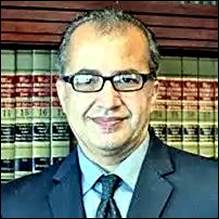
A State Bar Court judge has recommended that Pacific Palisades attorney Amir Mostafavi be disciplined for his use of fabricated citations, generated through the use of artificial intelligence tools, in briefs filed with Div. Three of this district’s Court of Appeal.
Yesterday, State Bar Court Judge Yvette D. Roland signed a recommendation that he “be suspended for one year, execution of which is stayed, [and] that he be placed on probation for one year” on the condition that, among other things, he complete 10 hours of continuing legal education focused on technology with at least half of that time spent on the risks of using artificial intelligence tools in legal work.
Mostafavi stipulated to the facts and disposition. The California Supreme Court will have the final say on the appropriate discipline.
Sanction Imposed
On September 14, Div. Three, imposed a $10,000 sanction on Mostafavi for filing opening and reply briefs in Noland v. Land of the Free L.P., replete with citations and quotes from non-existent cases. Writing for the court, Presiding Justice Lee Edmon said:
“What sets this appeal apart—and the reason we have elected to publish this opinion—is that nearly all of the legal quotations in plaintiff’s opening brief, and many of the quotations in plaintiff’s reply brief, are fabricated. That is, the quotes plaintiff attributes to published cases do not appear in those cases or anywhere else. Further, many of the cases plaintiff cites do not discuss the topics for which they are cited, and a few of the cases do not exist at all. These fabricated legal authorities were created by generative artificial intelligence (AI) tools that plaintiff’s counsel used to draft his appellate briefs. The AI tools created fake legal authority—sometimes referred to as AI ‘hallucinations’—that were undetected by plaintiff’s counsel because he did not read the cases the AI tools cited.”
The opinion was the first one in California to address the use of artificial intelligence in drafting legal documents.
Changes to Practice
Mostafavi paid the $10,000 within days of the order and, according to yesterday’s filing by the State Bar Court, “has since implemented changes to respondent’s citation and legal writing practices to prevent recurrence of his misconduct in the Noland appeal,” including “independent verification of all case citations generated by [artificial intelligence] tools in legal research and writing and commitment to ongoing education regarding use of [such] tools.”
However, the State Bar Court declared:
“By using artificial intelligence tools to conduct legal research and to prepare the opening and reply briefs…, which were signed and filed by respondent on October 9, 2024 and June 16, 2025,…without taking reasonable steps to acquire…the requisite learning…regarding the benefits and risks of using such technology, which resulted in the submission of two briefs to the court of appeal that contained fabricated legal authority, respondent recklessly and with gross negligence failed to perform legal services with competence on behalf of his client…in willful violation of Rules of Professional Conduct, rule 1.1(a).”
Waste of Judicial Time
Saying that his “misconduct harmed the administration of justice and the public by wasting judicial time and resources,” the disciplinary body acknowledged:
“[R]espondent had 12 years of discipline-free practice prior to his misconduct, he has presented evidence of good character, and he has demonstrated remorse and recognition of wrongdoing by virtue of entering into a prefiling stipulation, through his prompt acknowledgment of misconduct to the court in the Noland appeal, and through changes to his citation and legal writing practices.”
Finding that his misdeeds were “limited to one client matter and occurred over a relatively short period of time” and the tools were “a relatively new technology” when he filed the briefs “that many lawyers did not fully understand,” Roland said:
“A stayed suspension…will adequately serve the purposes of attorney discipline and simultaneously inform the public and members of the State Bar that the submission of briefs to the court replete with fabricated legal authority, caused by the attorney’s misuse of AI tools, may, absent significant mitigation, result in significant discipline.”
Copyright 2026, Metropolitan News Company