Wednesday, August 12, 2026
Page 1
Court of Appeal:
Suit Against Kenny Chesney for Imposter-Scam Rightly Axed
Opinion Says Celebrity Does Not Owe General Duty to Protect Fans From Fraud by Third-Party Impersonators Even if Star Is Aware That Such Schemes Are Afoot
By a MetNews Staff Writer
|
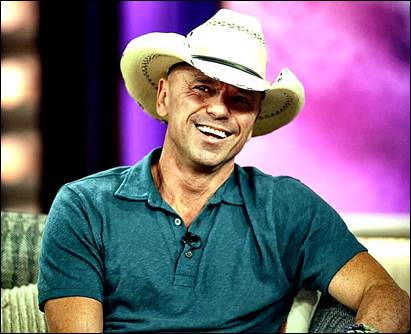
Div. Eight of this district’s Court of Appeal yesterday affirmed the judgment entered in favor of country music star Kenny Chesney after a fan alleged that he failed to protect her from a third-party impersonator who was able to convince the woman to loan him $310,000 to cover expenses purportedly relating to an upcoming award show and recording release based on “insider” information that she says was not publicly available.
Yesterday’s unpublished opinion, written by Justice Victor Viramontes and joined in by Presiding Justice Maria E. Stratton and Justice Shepard Wiley Jr., notes:
“[The plaintiff’s] inadequate warning and negligence causes of action are based on allegations that Chesney was aware that third parties were impersonating him and using confidential information about his music business to steal money from his fans. According to [the plaintiff], Chesney owed her a duty to warn…, including by posting warnings about such scams on his website and social media accounts. Had he posted such warnings, [the plaintiff] claims she would have realized the impersonator was not Chesney and she would not have agreed to loan the…money.”
Rejecting that view, Viramontes wrote:
“In the absence of any authority supporting the creation of a new legal duty that would require celebrities to…protect their fans against third-party imposter scams, we decline to create such a duty here….While we do not doubt that financial scams are becoming more sophisticated and prevalent as technological developments make it easier for people to impersonate others, the trial court aptly observed that it would ‘stretch[] the concept of duty beyond what is supported by common sense and sound public policy’ to require celebrities to post warnings about third-party scams on their websites and social media accounts lest they face liability for such scams.”
Social Media Contact
Seeking to impose the duty was Patricia Linson, a realtor in Henderson, Nevada, who says she was contacted on LinkedIn by a party claiming to be the singer in February 2021. She alleged in her operative complaint, filed on June 14, 2024, that the impersonator convinced her he was the real deal by saying that he was about to release four new songs, information that was not yet publicly available.
After the news broke about upcoming releases that matched what she was told, she agreed to loan the imposter money based on an assertion that he needed cash to cover the cost of appearing at the Academy of Country Music Awards due to a hold being placed on his bank accounts. A promissory note was signed that April, and she wired money to Reseda resident Nayri Apelian, purportedly at the fraudster’s directions.
She named Apelian, Chesney, and an unnamed man as defendants. The Doe-party was eventually dismissed from the suit due to her failure to identify and serve the imposter, and Apelian filed for bankruptcy protections in September 2022.
Linson’s operative pleading asserted 10 causes of action against Chesney, including fraud, inadequate warning, negligence, and negligent supervision, the latter of which was based on a theory that the imposter must have been an employee of the singer in light of the confidential information used to defraud her.
Pleading Failure
Chesney demurred, alleging that Linson had failed to plead facts showing that he owed her a duty to warn or protect her from third parties using his identity to scam fans out of money, or that it was foreseeable that an unnamed employee would use information about his music business to help defraud innocent parties. Los Angeles Superior Court Judge Virginia Keeny sustained the filing, without leave to amend, saying:
“When pressed, counsel did not have any actual facts he intended to add that would establish that [the impersonator] or Apelian actually were employed by Chesney, that Chesney had actual knowledge of this particular scam, or that Chesney had any ability to control the activities of the scammers; rather counsel argued that because these types of celebrity scams are on the upswing, Chesney could have placed warnings on his website to alert fans to possible scams.”
She added: “These factual allegations are insufficient to rise to the level of imposing a duty to warn or control on Chesney over the fraudulent actions of third parties. While these scams are indeed unfortunate, to require every famous person to include disclosures on their social media pages that unknown individuals might be impersonating them (and face liability for those scams if they do not), stretches the concept of duty beyond what is supported by common sense and sound public policy.”
Duty of Care
Viramontes noted that the California Supreme Court has established a two-part inquiry for determining whether to impose on a defendant a legal duty to protect a plaintiff from injuries caused by a third party. At the first step, a court must determine whether a special relationship or other circumstances justify imposing liability on a defendant.
Linson alleged that third-party celebrity impersonation scams have become so prevalent that the creation of a new duty requiring stars who are aware of the schemes to post warnings on their websites and social media accounts is warranted.
In her opening brief, the plaintiff said: “That is exactly what Blake Shelton, Dolly Parton did. They both placed orange safety cones on their sites warning their fans. On March 19, 2018, Blake Shelton warned his fans as follows: ‘ATTENTION: WE WOULD NEVER MESSAGE ANYONE ASKING FOR ANY SORT OF DONATION!! Please do not send money to anyone pretending to be Blake...’
“Similarly when Dolly Parton became aware that people were using her name to scam the public she placed an orange safety cone on her social media sites. ‘It has come to our attention that there are numerous fake accounts pretending to be Dolly on social media....She will never ask for personal information or money on any social media platform.’ ”
No Authority
Viramontes responded:
“Linson cites no authority, and we are aware of none, that required the celebrities in the anecdotes and news articles that she relies on to enact prophylactic measures to protect the public from third-party misconduct. Nor does Linson cite any authority that supports the proposition that because some celebrities have voluntarily undertaken measures to protect the public from third party impersonators, that all celebrities who are aware of such scams must undertake similar measures.”
He added:
“We conclude the court correctly found Chesney owed Linson no such duty. Because Linson has not otherwise shown the court erred in dismissing any of her claims against Chesney, we affirm.”
The case is Linson v. Chesney, B342104.
Gregory M. Hatton and Alice M. Hodsden of the Costa Mesa firm Theodora Oringher PC acted for Chesney. Sacramento-based practitioner Randy Plentzas and Ronda Nadine Baldwin-Kennedy, a California attorney whose business address is in Nevada, acted for Linson.
Copyright 2026, Metropolitan News Company