Friday, October 2, 2026
Page 1
$19 Million Judgment Upended in Case Over Avenatti’s Jet
In Fight Over Insurance Payout After Seizure of Aircraft, Court of Appeal Says Insurer Was Entitled to Rescind Over Non-Disclosure of Use of Embezzled Funds to Buy Aircraft by LLC Co-Founded by Ex-Attorney
By Kimber Cooley, associate editor
|
|
|
MICHAEL AVENATTI disbarred attorney |
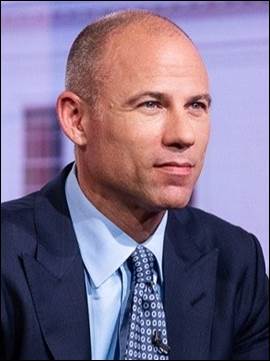
Div. Six of this district’s Court of Appeal yesterday reversed a nearly $19 million judgment against an insurer over its failure to pay out on a policy covering a jet owned by a company formed by now-disbarred California attorney Michael Avenatti and his former client, tech-entrepreneur William Parrish, after the aircraft was seized by the U.S. Treasury Department in connection with a criminal case accusing the ex-lawyer of embezzlement.
Yesterday’s opinion, authored by Justice Kenneth R. Yegan, says that the failure to disclose that the aircraft was partially paid for by funds Avenatti stole from a client gave the insurer, Starr Indemnity & Liability Company, the right to rescind the policy covering the aircraft regardless of whether the defendant made any inquiries or conducted due diligence about the purchase of the jet by Passport 420 LLC.
Yegan wrote:
“An applicant for insurance has a duty to disclose facts within the applicant’s knowledge which are material to the insurance contract. (Ins. Code, § 332.) A fact is material if it is reasonable and probable that knowing the fact would change the insurer’s decisions about the contract. (§ 334.) We hold that, if an applicant for insurance fails to disclose a material fact, the insurer may rescind the policy when it learns the truth, even if the carrier never asked the applicant about that fact. Here, the insured did not disclose that almost two million dollars used to purchase the insured property had been embezzled.”
He added: “We conclude the trial court erred when it denied Starr’s motion for judgment because Passport concealed the material fact that Avenatti embezzled funds used to purchase the aircraft and his knowledge of that fact is imputed to Passport. Starr was, therefore, entitled to rescind the policy. Accordingly, we reverse the judgment.”
2016 Purchase
Avenatti, who rose to fame for his representation of adult-film star Stormy Daniels in her 2018 lawsuit against President Donald Trump over a nondisclosure agreement that purportedly barred her from discussing an alleged 2006 sexual encounter, agreed to purchase the jet with Parrish in 2016. The duo formed Passport that summer.
The company had two members, the now-defunct Avenatti & Associates APC and Spring Creek Research LLC, a firm controlled by Parrish. Spring Creek contributed 52.7% of the approximately $4 million purchase price of the jet and the law firm contributed the rest.
Avenatti served as manager when the Starr policy was initially secured in January 2017 but Parrish claimed that he was forced to take over in the spring of 2018 after the ex-lawyer stopped paying the company’s bills. The policy includes a “War Risk” endorsement, which specifies that Starr will pay for the “physical loss” of the aircraft caused by a government seizure.
Seizure of Jet
On April 10, 2019, the federal government seized the jet, and Avenatti was indicted for wire and bank fraud relating to allegations that he embezzled money from a client.
Parrish submitted a “Sworn Statement in Proof of Loss” to Starr seeking to recover $3,990,000, the insured value of the aircraft less the $10,000 deductible. Starr responded by sending a reservation-of-rights letter declining to pay until an internal investigation was completed.
Passport, together with Spring Creek and Parrish, filed a complaint against the insurer in July 2019, asserting a claim for breach of contract, among others, and seeking declaratory relief. While the matter was pending, Starr denied Passport’s claim, citing the company’s “concealment of material facts from Starr during the underwriting process—specifically, that the Aircraft was purchased with stolen funds.”
At the close of Passport’s case during the ensuing jury trial, the defendant moved for judgment under Code of Civil Procedure §631.8, arguing that the plaintiff’s failure to disclose the embezzlement entitled Starr to equitable rescission of the policy. Santa Barbara Superior Court Judge Colleen Sterne denied the request.
The jury returned a verdict favoring the plaintiffs in May 2024, awarding them $3.99 million for the breach of the policy and $15 million in punitive damages.
Trial Testimony
Yegan noted that representatives of Starr testified that it would not have insured the aircraft if it had been aware that the jet had been purchased with “illegal funds.” A witness acknowledged that the company might have been able to determine the illicit funding if a background check had been conducted but said:
“When we see an attorney, we expect, okay, A they’re financed; B, they’re following the law.”
The jurist opined:
“Here, Starr’s underwriter and his supervisor both testified that the use of embezzled funds in the aircraft purchase was a material fact and that Starr would not have issued the policy had it known the truth. This seems self-evident but the trial court rejected this testimony as self-serving and lacking credibility because, during the application process, Starr asked no questions regarding the source of funds.”
Rejecting this view, he remarked: “[T]he question is not whether Starr asked about the source of Passport’s funds. The question is whether its underwriting decision would have been different had Passport disclosed the true facts….[T]o find the concealment immaterial, we would have to conclude that Starr would have insured Passport against government seizure of its aircraft even though it knew some of the funds used to purchase the aircraft were obtained through the commission of a federal crime. We cannot do so.”
Undisclosed Material Fact
He continued:
“As a matter of law, the undisclosed fact of Avenatti’s embezzlement was material….The concealment of this material fact entitled Starr to rescind the policy….The remaining question is whether Avenatti’s knowledge of his crimes is imputed to Passport. We conclude it must be.”
Citing the general rule that “the knowledge of an agent (here, Avenatti) is imputed to his or her principal (Passport),” he was unpersuaded that a “malevolent agent” exception applied. He pointed out that the carve-out has been interpreted to require an action that is adverse to the company and commented:
“Here, Avenatti embezzled his client’s money after he became Passport’s manager. Although he was not acting as an agent of Passport when he committed the embezzlement, he surely was acting as its agent when he applied those funds to the aircraft purchase….He used embezzled funds for Passport’s unknowing benefit. Avenatti was also acting as Passport’s manager and in its interest when Passport obtained the Starr insurance policy. Nothing in the record suggests that, when it issued the policy, Starr was not dealing with Passport in good faith.” In a footnote, the justice added:
“To be sure, Avenatti defrauded many clients. They were victims. He defrauded Passport 420, LLC. It was a victim. He defrauded William Parrish. He was a victim. And he defrauded Starr, the insurance carrier. It was a victim. None of these victims had any inkling that Avenatti was a master deceiver and a criminal.”
The case is Passport 420 LLC v. Starr Indemnity & Liability Company, 2026 S.O.S. 3140.
Starr Indemnity was represented by Carl J. Basile, Michael J. Terhar, Steven D. Sanfelippo, Jonathan Edward Hembree of the Pasadena firm Cunningham Swaim LLP and Ralph S. LaMontagne Jr. of LaMontagne & Amador LLP, also based in Pasadena.
Acting for Passport were Myron Moskovitz and Jason Ross Marks of the Piedmont firm Moskovitz Appellate Team together with Lawrence James Conlan of the Santa Barbara-based Presidio Law Firm LLP.
Avenatti was ordered stricken from the roll of attorneys by the California Supreme Court as of February of last year. The disciplinary case that led to his disbarment was based on a 2020 conviction in the U.S. District Court for the Southern District of New York relating to Avenatti’s attempt to extort more than $20 million from sportswear giant Nike under threat that he would tar the company’s reputation if it failed to comply with his demands.
He pled guilty in 2022 to four counts of wire fraud in the Central District of California relating to the criminal matter that led to the seizure of his jet. He was sentenced to an aggregate of approximately 11 years in federal prison across multiple cases.
Copyright 2026, Metropolitan News Company