Wednesday, July 1, 2026
Page 1
Court of Appeal:
Federal Conviction Blocks State Charges Over Pelosi Attack
Opinion Says Double Jeopardy Precludes Prosecution for Certain California Offenses Even if Elements Differ Where Physical Conduct Underlying Offenses Is Same, Drawing Dissent
By a MetNews Staff Writer
|
|
|
DAVID
DEPAPE |
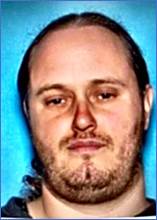
A divided Div. Two of the First District Court of Appeal held yesterday that a trial judge rightly dismissed attempted murder and other counts in the pending state criminal case over the 2022 attack on Paul Pelosi in his home based on double jeopardy principles following his conviction of federal assault charges, saying that courts are to look at the conduct at the heart of the crime rather than the elements at stake in determining whether the bar attaches.
The victim is the husband of U.S. Rep. Nancy Pellosi, D-Alameda County. She was then speaker of the House.
“Whenever on the trial of an accused person it appears that upon a criminal prosecution under the laws of the United States, or of another state or territory of the United States based upon the act or omission in respect to which he or she is on trial, he or she has been acquitted or convicted, it is a sufficient defense.”
The court cited the 2012 California Supreme Court decision in People v. Homick, which held that “a defendant may not be convicted after a prior acquittal or conviction in another jurisdiction if all the acts constituting the offense in this state were necessary to prove the offense in the prior prosecution” and that “a conviction in this state is not barred where the offense committed is not the same act but involves an element not present in the prior prosecution.”
Acknowledging that the “focus on the physical act upon which a prosecution is based has the effect in the present case of barring the state from pursuing charges of an offense California has deemed serious enough to warrant a life sentence,” Presiding Justice Therese M. Stewart, writing for the majorityt, said:
“The dismissed counts did not require proof of physical conduct beyond the conduct [the defendant] was convicted of committing in the federal case, and additional nonact elements of the state offenses did not render section 656 inapplicable….The attempted murder, elder abuse and assault with a deadly weapon counts were properly dismissed.” Justice Marla J. Miller joined in the opinion, and Justice Tara Desautels dissented, arguing:
“Deciding the application of section 656 in the instant case requires a comparison of the elements of the assault charge proven in [the] federal action to the elements required to be proven in the contested counts in the California action.”
Hammer Attack
The question arose after David DePape was charged in both federal and state court with offenses relating to an October 2022 incident in which he is accused of entering the Pelosis’ home around 2 a.m. and attacking the husband with a hammer.
On Nov. 16, 2023, he was found guilty in federal court of the attempted kidnapping of a federal officer as well as assault with a dangerous weapon on an immediate family member of a U.S. official, in violation of 18 U.S.C. §§1202(a)(5) and 115(a)(1)(A). On May 17, 2024, U.S. District Court Judge Jacqueline Scott Corely of the Northern District of California sentenced him to 30 years in prison.
The parties in the state case stipulated that trial began on April 19, 2024, but the jury was not sworn in until May 24 due to certain pretrial motions and scheduling issues. On May 21, DePape moved to dismiss the attempted murder, elder abuse, and assault with a deadly weapon charges against him based on §656, attaching documents from the federal case as exhibits.
San Francisco Superior Court Judge Harry M. Dorfman said he would make a ruling on the question after the prosecution presented its case in chief, citing concerns with the timing of the motion and the evidentiary basis for the arguments.
On June 6, 2024, he granted the motion as to the attempted murder, elder abuse, and assault with a deadly weapon counts. He was sentenced to life in prison without the possibility of parole in October 2024 after a jury found him guilty on remaining charges, including false imprisonment of an elder by violence and aggravated kidnapping.
Prosecutors appealed the dismissal under Penal Code §1238, which provides that a right to appeal from an “order or judgment dismissing or otherwise terminating all or any portion of the action…entered before the defendant has been placed in jeopardy or where the defendant has waived jeopardy.”
Elements Versus Action
Stewart pointed out that “[o]ur dissenting colleague reads Homick…as requiring consideration of all the statutory elements of the federal and state offenses rather than the physical act or conduct necessary to prove those elements” but said that the case “emphasize[s] that the test for application of section 656 turns on conduct.” Opining that the court’s reading complied with the language of §656, she wrote:
“We fail to see how a focus on the statutory elements of the offenses, divorced from any factual context, allows a court to identify the ‘act or omission in respect to which [the defendant] is on trial’ and ‘has been acquitted or convicted’ in the other jurisdiction.”
Applying the standard, she said:
“Pape was convicted in the federal case of assaulting Pelosi, an immediate family member of a federal official…, using a dangerous weapon, a hammer. All the counts dismissed in the present case were based on DePape striking Pelosi with the hammer. Count 1 alleged willful, deliberate and premeditated attempted murder perpetrated by means of the hammer blow; count 3 alleged elder abuse based on the injury inflicted by the blow, and count 4 alleged assault with a deadly weapon, the hammer.”
Rejecting the prosecutor’s assertion that each of the state charges required proof of a physical act that was not required to be proven for the federal assault, she remarked that the “willfulness, premeditation and deliberation” required for attempted murder amount to “ ‘nonact’ elements that do not defeat the application of section 656.”
As to the prosecutors’ assertion that DePape’s having armed himself with zip ties and cornering Paul Pelosi in his bedroom constituted “additional evidence which would support the particular nuances of an elder abuse charge” but was not “necessary physical act evidence” for the federal counts, she remarked:
“But this additional requirement for proof of the offense does not alter the physical act for which DePape was being prosecuted—the act of striking Pelosi’s head with a hammer.” Noting that the court denied DePape’s request to dismiss the appeal as unauthorized based on a conclusion that he “waived jeopardy by filing a motion to dismiss on the eve of trial,” the court declined to reconsider the decision based on revisited arguments in the defendant’s briefing.
Desautels’ View
Desautels wrote:
“I would conclude the elements necessary to prove that the attempted murder was ‘willful, deliberate, and premeditated’ as charged in count 1 of the state court action differ from those required to prove the federal assault for which DePape was convicted; therefore, section 656 does not preclude prosecution in California.”
Saying that “[t]he majority overlooks these elemental differences and instead focuses on the conduct necessary to prove the federal conviction,” she asserted that the court’s “expansive reading of section 656 that uses a federal assault conviction to preclude prosecution for the different offense of attempted murder in state court just because both charges may be based on the same conduct…is inconsistent with our Supreme Court precedent.”
Reasoning that the same principle holds true as to the elder abuse charges, she said:
“[E]lder abuse…requires proof of the additional elements that Pelosi be an elder and that DePape knew or reasonably should have known that he was 65 years or older at the time of the infliction of harm….The majority does not discuss these elements or the enhancement alleged pursuant to section 368, subdivision (b)(1), and presumably folds them into their concluding statement that ‘additional nonact elements of the state offenses did not render section 656 inapplicable,’ but they deserve independent consideration.”
She declared:
“For these reasons, I respectfully dissent and would reverse the judgment of the trial court dismissing count 1, attempted murder, and count 3, elder abuse, and their associated enhancements and would remand for further consideration. I concur with the majority’s affirmance of the dismissal of count 4, assault with a deadly weapon.”
The case is People v. DePape, 2026 S.O.S. 1894.
Copyright 2026, Metropolitan News Company