Wednesday, June 3, 2026
Page 1
Judges Clash Over Immunity for Jail Suicide—Ninth Circuit
Majority Says Gardena Jailer Was Wrongly Denied Qualified Immunity Over Death of Party With Known History of Trying to Kill Himself, Drawing Dissent Over Whether Facts Known to Officers Triggered Additional Duties
By Kimber Cooley, associate editor
|
|
|
BRANDON TRANBERG-HOADLEY decedent |
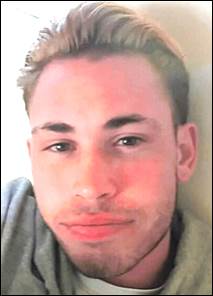
A divided Ninth U.S. Circuit Court of Appeals held yesterday that a District Court judge wrongly denied qualified immunity to a City of Gardena jailer who failed to perform a welfare check for nearly an hour after placing an inmate with an alleged history of trying to kill himself in an isolated cell at the facility, drawing a dissent over what facts demand heightened supervision for mentally ill subjects in custody.
Circuit Judges Michelle T. Friedland and Eric D. Miller signed yesterday’s memorandum decision reversing the order while District Court Judge Anne R. Traum of the District of Nevada, sitting by designation, dissented.
All the jurists agreed that the jailer was informed of allegations that the subject had suffered suicidal thoughts and had a history of trying to hurt himself but disagreed over whether that information was sufficient to trigger heightened supervision under settled Ninth Circuit precedent.
The question arose after Brandon Tranberg-Hoadley died after hanging himself in a cell on May 19, 2021. He had been arrested earlier that day after deputies with the Los Angeles County Sheriff’s Department responded to a call indicating that a man was outside a residence yelling that he wanted to kill himself.
Tranberg-Hoadley told the deputies that he was “so depressed,” that his best friend had just died, and that he was trying to speak with the caller’s daughter, his purported girlfriend, to tell her that he would go to a mental hospital and seek help for an asserted drug addiction. He assured them that he wasn’t going to hurt himself.
His girlfriend said he had raped her approximately one week earlier in Gardena after he consumed a controlled substance and was “acting crazy” and “feeling guilty” over the alleged assault. Gardena Police Officers responded, took him into custody after the victim informed them that Tranberg-Hoadley had purportedly tried to hang himself multiple times in the preceding two-week span, including once that morning.
Isolated Cell
After he was booked into the city jail, Detention Officer Rocio Martin-Leal, escorted him to a remote cell due to COVID-19 restrictions allegedly precluding her from booking him into the area used for at-risk inmates as it was already occupied. Martin-Leal said she was prevented from performing a visual safety check on Tranberg-Hoadley due to a high volume of arrestees until nearly 50 minutes had passed, at which point his body was discovered.
His parents and estate filed a complaint against the city, Martin-Leal, and other officers in April 2022, asserting deliberate indifference claims under the Eighth and Fourteenth Amendments pursuant to 42 U.S.C. §1983 as well as a wrongful death cause of action based on California law.
On Oct. 23, 2024, District Court Judge Fred W. Slaughter of the Central District of California denied summary judgment to Martin-Leal, finding that the officer was not entitled to qualified immunity as to the federal claims and that the plaintiff had established genuine issues of material fact as to the state law cause of action. He granted the motion of the other defendants as to all claims except the wrongful death cause of action asserted against the city.
Addressing Martin-Leal’s assertion of qualified immunity, Slaughter wrote:
“Applying [Ninth Circuit] precedent to this case, and viewing the facts in the light most favorable to Plaintiffs, the court finds a reasonable officer in Detention Martin-Leal’s position would have known that failing to conduct ‘a proper medical screen…to ensure the medically appropriate protocol was initiated,’…and or take preventative measures in response to the indicators that Mr. Tranberg-Hoadley was a heightened risk of suicide, was unlawful before the events of this case. Accordingly, the court concludes Detention Officer Martin-Leal is not entitled to qualified immunity….”
Qualified Immunity Case
Friedland and Miller cited the 2019 Ninth Circuit case of Horton v. City of Santa Maria, in which the court held that an officer was entitled to qualified immunity relating to a plaintiff’s suicide attempt in jail that purportedly left him seriously injured after the facility was warned by his mother that the inmate was suicidal. They remarked:
“With respect to Plaintiffs’ federal claims, we conclude that Martin-Leal is entitled to qualified immunity. ‘Government officials enjoy qualified immunity from suit under § 1983 unless their conduct violates clearly established law.’…In the context of jail-suicide cases…, we have held that it is ‘critical whether our case law had, at the time of the events in [question], sufficiently clarified when a detainee’s imminent risk of suicide was substantial enough to require immediate attention.’ ”
Saying “[t]hat standard is not met here,” the judges opined:
“Martin-Leal received vague and inconsistent information regarding Tranberg-Hoadley’s risk of suicide. In the course of bringing Tranberg Hoadley to his cell, the arresting officer informed Martin-Leal that Tranberg-Hoadley’s ‘girlfriend said that [Tranberg-Hoadley has] had suicidal thoughts’ and that ‘the girlfriend also said that he has a past of tryin[g] to hurt himself,’ but at the same time, the officer relayed to Martin-Leal that Tranberg-Hoadley ‘said he was not suicidal…’ Tranberg-Hoadley then committed suicide minutes after they placed him in his cell.”
The jurists continued:
“Our cases could not have placed Martin-Leal on notice that ‘a reasonable officer, knowing what [Martin-Leal] knew, would have understood that failing to check on [Tranberg-Hoadley] immediately after’ placing him in his cell ‘presented such a substantial risk of harm to [Tranberg-Hoadley] that the failure to act was unconstitutional.’ ”
Adding that “we lack jurisdiction to review Defendants’ appeal of the district court’s denial of summary judgment on the state law issues because that denial is not an appealable collateral order” as it was based on a ruling relating to a defense under the California Government Code, the court dismissed the “remainder of [the defendants’] appeal.”
Traum’s Dissent
Saying that “I respectfully disagree with my colleagues on the issue of qualified immunity because Officer Martin-Leal knew that Tranberg-Hoadley presented a risk of imminent suicide when she left him in a remote cell and then failed to check on him for 48 minutes,” Traum wrote:
“A reasonable officer would have understood, and Martin-Leal herself acknowledged, that Tranberg-Hoadley’s risk of suicide was imminent. When, at the cell, [another officer] asked, ‘[d]o you want him in a jumpsuit?’ Martin-Leal answered, ‘[n]o, he can hang himself with that.’ This shows that Martin-Leal perceived the risk of suicide to be imminent….Minutes later in her office, Martin-Leal confirmed that ‘because of the past suicide attempts,’ Tranberg-Hoadley would be a ‘county run,’ meaning he would need to be transferred to the county jail for more intensive medical attention. Any reasonable officer would have concluded, as did Martin-Leal, that Tranberg-Hoadley was at risk of killing himself at any minute.”
She continued:
“These facts make this case different from Horton. The officer in Horton did not know the detainee was suicidal when he…placed him in a cell….The officer then called the detainee’s mother, who told him her son had been suicidal two weeks earlier and may still be….The detainee hanged himself during the call and the officer checked on him some 12-15 minutes [later]….The plaintiff…did not argue that leaving the detainee in the cell in the first instance was unconstitutional….That is the issue here because Martin-Leal knew that Tranberg-Hoadley was imminently suicidal when she…walked away, busied herself with other matters, and then failed to return for 48 minutes.”
Asserting that “qualified immunity may be a closer call if the officer ‘made some efforts’ to address the medical risk at hand,” she concluded that “the officer is not entitled to immunity when they ‘did nothing’ ” and commented:
“Because a reasonable officer in Martin-Leal’s position would have understood that leaving Tranberg-Hoadley alone and unobserved in a remote cell for 48 minutes was unconstitutional, I would affirm the district court’s denial of qualified immunity.”
The case is Estate of Tranberg-Hoadley v. City of Gardena, 24-6832.
Copyright 2026, Metropolitan News Company