Thursday, February 19, 2026
Page 3
Court of Appeal:
Judge Erred in Applying 2020 Deadly Force Law to 2019 Case
Opinion Says Reversal of $3.5 Million Judgment Required in Wrongful Death Action Relating to Orange County Police Shooting, Jury Improperly Instructed That Lethal Intervention Must Be ‘Necessary’ to Be Justified
By a MetNews Staff Writer
|
|
|
DAVID SULLIVAN |
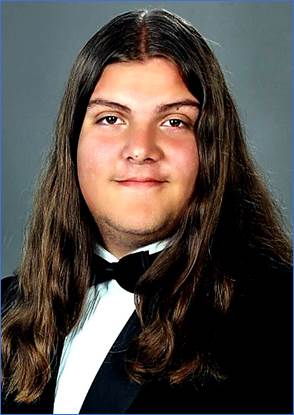
Div. Three of the Fourth District Court of Appeal has reversed a $3.5 million wrongful death judgment awarded to the mother of a 19-year-old teenager killed by police during a traffic stop in Orange County due to the trial judge’s error in instructing the jury on the use of deadly force by officers based on a legal standard not yet in effect at the time of the fatal incident.
Rejecting the plaintiff’s contention that changes to the law governing the permissible use of deadly force, which were adopted in 2019 as part of Assembly Bill 392, were merely declaratory statements reflecting the state of law already in effect based on governing jurisprudence, the court, in an unpublished opinion filed Tuesday, concluded that the amendments amount to substantive changes that were not made retroactive in application by the Legislature.
Assembly Bill 392 amended Penal Code §835a, governing the use of force by police officers, to demand that deadly force be used only when necessary and where no less-intrusive alternative is feasible. Following the rollout of the changes in January 2020, the Judicial Council revised jury instructions to reflect the new standard.
Justice Martha K. Gooding authored the opinion, joined in by Acting Presiding Justice Joanne Motoike and Justice Thomas A. Delaney. She wrote:
“[W]e hold the trial court erred in instructing the jury using [California Civil Jury Instructions] Nos. 441 and 1305B, as adopted by the Judicial Council following the 2019 incident in this case, because the amendment to Penal Code section 835a that was reflected in those jury instructions was not made retroactive by the Legislature and it holds peace officers to a new and more stringent standard for assessing when they can lawfully use deadly force.”
August 2019 Incident
The question arose after Deanna Sullivan filed a complaint against the City of Buena Park and two of its police officers, Bobby Colon and Jennifer Train, asserting wrongful death and other causes of action relating to an August 19, 2019 incident in which her son, David Sullivan, was killed.
On that date, the officers observed a black Range Rover with expired registration tags driving in Fullerton. After confirming that the driver, David Sullivan, was not the registered owner of the car, which had been reported stolen, Colon attempted to arrest the teen.
Body-worn camera footage showed that David Sullivan responded to the officers’ attempt to arrest him by reversing the car and crashing into a passing vehicle. After exiting the Range Rover, David Sullivan initially ran away from the officers, then he abruptly turned and headed toward Colon and Train, who opened fire.
He was struck in the heart by a bullet and died at the scene. It was later determined that he was unarmed.
At the 2024 trial, the plaintiff’s attorneys with the Los Angeles-based Dodrick Law Corporation argued that David Sullivan was suffering a mental health crisis on the night in question.
Jury Instructions
Orange Superior Court Judge Lee L. Gabriel informed the jury, using the revised jury instructions reflecting the changes to §835a, that “[a] law enforcement officer may use deadly force only when necessary in defense of human life” and that “you must consider…whether [Colon and/or Tran] used other available…techniques as alternative [sic] to deadly force, if it was reasonably safe and feasible to do so to an objectively reasonable officer.”
At the conclusion of the trial, the jury found defendants liable for state-law causes of action relating to the negligent use of deadly force and battery by a peace officer. After determining that Sullivan was 58% at fault for his own death, Deanna Sullivan was awarded $3.5 million in noneconomic damages.
On June 13, 2024, Gabriel declined to adjust the award based on a defense motion seeking a reduction to purportedly reflect the comparative negligence finding, and judgment was entered in favor of the plaintiff the following month.
Agreeing with the defendants that the changes to §835a created heightened standards that were not in effect at the time of the incident, Gooding wrote:
“Prior to the enactment of Assembly Bill 392, California statutory law…did not state an officer may use deadly force only when necessary and when no alternative is feasible. Although some courts that examined the constitutional limits of the use of force by peace officers have referenced necessity as a factor in evaluating the reasonableness of an officer’s actions, we found no authority, and the parties have cited none, that held an officer’s use of deadly force must have been necessary.”
Saying that Legislative intent in enacting the statute may be relevant to the determination of whether a provision merely clarifies existing law or articulates a new standard, she remarked:
“[W]e need look no further than the explicit language of the new statute….The requirement that peace officers consider feasible alternatives before using deadly force reflects a material change in the law. Prior to the enactment of Penal Code section 835a, California courts had held [that there is no duty to use non-deadly alternatives if deadly force is otherwise constitutionally permissible].”
Preexisting Law
Acknowledging that the Third District Court of Appeal held in the 2020 Koussaya v. City of Stockton decision that “[r]elevant portions of [Penal Code section 835a] are declaratory of preexisting case law,” she opined:
“The court…was referring to law that already existed before the enactment of Assembly Bill 392 that an officer’s preshooting conduct must be considered as part of the totality of the circumstances in assessing the reasonableness of the officer’s use of deadly force….The Koussaya court did not hold that all provisions of Assembly Bill 392, including those at issue in this case, are declaratory of existing law as it stood prior to its enactment.”
Addressing whether the instructional error was prejudicial, Gooding said:
“[P]laintiff’s counsel argued to the jury…that defendants failed to use other available resources…: ‘Like you use a baton, use a taser, use the bean bag. Wait for more officers…..[T]he law expects them to use these tactics, use these other things. Why? Because the last possible option is to kill.’ ”
Gooding declared:
“We have no difficulty concluding it was reasonably probable defendants would have obtained a different result had the jury been properly instructed on the law. The error was reversible.”
The case is Sullivan v. City of Buena Park, G064558.
Copyright 2026, Metropolitan News Company