Tuesday, September 8, 2026
Page 1
Coppola’s Suit Against Variety Is SLAPP—C.A.
By a MetNews Staff Writer
|
|
|
FRANCIS FORD COPPOLA director |
|
|
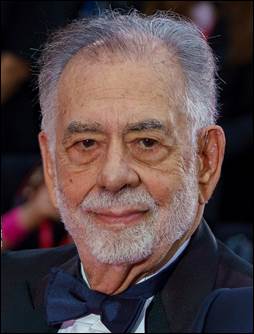
The Court of Appeal for this district on Friday held that a libel action brought by legendary director Francis Ford Coppola against Variety lacks minimal merit, reversing an order denying an anti-SLAPP motion.
Writing for Div. Five, Justice Lamar Baker declared that the analysis provided by Los Angeles Superior Court Judge Christopher K. Lui in ruling in favor of Coppola “is flawed and requires reversal.” Baker said there is no question as to the Variety article satisfying the first prong of the satisfying anti-SLAPP statute, Code of Civil Procedure §425.16—protected speech—but declared, disagreeing with Lui, that the plaintiff had not shown a probability of prevailing on the merits, the second prong.
The July 26, 2024 article bears the headline, “Video of Francis Ford Coppola Kissing ‘Megalopolis’ Extras Surfaces as Crew Members Detail Unprofessional Behavior on Set (EXCLUSIVE).” Authoring the piece were Brent Lang (Lang), and Tatiana Siegel, who were also named as defendants.
The online version starts out:
“With two months to go before the release of ‘Megalopolis,’ things are about to get awkward.
“Video has surfaced of director Francis Ford Coppola that shows the legendary director trying to kiss young female extras on the set of his ambitious sci-fi epic. Variety has obtained two videos (posted below) that were taken by a crewmember last year during the filming of a bacchanalian nightclub scene.
“Two sources told Variety that Coppola appeared to act with impunity on set. And unlike traditional movies, Coppola financed the entire $120 million budget himself, so there were none of the traditional checks and balances in place. The videos would appear to corroborate a bombshell report in the Guardian that claimed the 85-year-old director ‘tried to kiss some of the topless and scantily clad female extras.”
The article says the videos “appear to corroborate a bombshell report in the Guardian” that Coppola had kissed the women and told them “he was ‘trying to get them in the mood.’ ”
It goes on to report:
“One source who was on the set during the nightclub scene estimated that between 150 to 200 people were assembled, including background actors and crew as Coppola started directing the scene. The filmmaker kept leaping up to hug and kiss several women, often inadvertently inserting himself into the shot and ruining it, which the source said was unusual.”
Another source is quoted as saying that because Coppola funded the movie, “there was no HR department to keep things in check,” saying of anyone critical of the conduct:
“Who were they supposed to talk to? Complain to Coppola and report Coppola to himself?”
Coppola reportedly spent about $120 million of his own funds on the film. It proved a box office failure.
Lui ruled:
“Even if plaintiff did kiss the women, whether or not they were uncomfortable and thus did not welcome hugging and/or kissing—a defamatory implication that plaintiff was committing unwanted touching (battery)—is something that can only be ascertained through witness statements, and thus presents a question of fact.” He said that Coppola’s denial of the allegation that he ruined scenes establishes a probability of establishing defamation.Viewing it differently, Baker wrote:
“Coppola does not dispute he kissed some female extras while filming the nightclub scene, and defendants’ suggestion that their videos appear to corroborate the Guardian’s reporting is a statement of opinion that is not actionable as libel.”
The justice continued:
“The statement that Coppola often inadvertently inserted himself into shots and ruined them is a combination of non-actionable opinion and a factual statement for which Coppola has provided no evidence of falsity: the idea that Coppola ruined the shots is obviously a matter of non-actionable opinion (as Coppola’s own declaration confirms), and although Coppola maintains his appearance in shots from the nightclub scene was unavoidable in some instances and intentional in others, he has not shown his appearance was not at times both avoidable and unintentional.”
Baker added: “The HR and ‘checks and balances’ statements in the article are not false because it is uncontroverted that Coppola’s independently-financed film did not have the same compliance infrastructure as a studio film.”
The case is Coppola v. Variety Media, B345022.
Copyright 2026, Metropolitan News Company