Tuesday, September 1, 2026
Page 1
C.A. Shields Identity of Publicly Named Alleged Rapist
By Roger M. Grace, editor
Div. One of the Court of Appeal for this district has agreed. in an opinion, with the Los Angeles Times and writer Noah Goldberg that there’s no bar to the disclosure of records by a state university relating to its determination that a professor committed the rape of a colleague, but has withheld the man’s identity, spurning the contention that anonymity is inappropriate where the name of the person has been publicly revealed.
Presiding Justice Frances Rothschild authored Friday’s unpublished opinion. A publicly released version was partially redacted, with the full opinion sealed.
The court affirmed an April 14, 2025 order by then-Los Angeles Superior Court Judge Stephen I. Goorvitch (now a justice of this district’s Court of Appeal) denying a preliminary injunction that would have blocked release by the University of California at Irvine (“UCI”) of records concerning sexual misconduct allegations that a committee found to be substantiated. Goorvitch concluded that “the records at issue fall outside” the exception-to-disclosure provision of the California Public Records Act (“CPRA”) pertaining to certain personnel matters.
The investigation was conducted pursuant to Title IX of the Education Amendments of 1972 which mandates that universities receiving federal funding look into allegations of sexual harassment and sexual assaults. Only claims that UCI’s Title IX committee found to be supported are proposed by the university to be released.
Real Parties
While The Regents of the University of California was the respondent on appeal, The Times and Goldberg were the real parties in interest. Arguing in defense of Goorvitch’s rejection of a “reverse-CPRA action”—which sought to bar the release of records by UCI—they expressed puzzlement as to why anonymity is being accorded the alleged rapist, saying:
“The allegations against Appellant are substantial and were sustained by UCI’s own investigative process. The complainant alleged that Appellant raped her in UCI faculty housing on August 2, 2020….The allegations were detailed in a publicly filed complaint in Orange County Superior Court that is already accessible to any member of the public….Appellant himself told the UCI investigator that he had offered the complainant $100,000 to make the matter ‘go away.’ ”
The newspaper and its reporter went on to say in the brief, signed by La Verne attorney Kelly A. Aviles:
“An injunction cannot meaningfully protect Appellant’s claimed privacy interest because the specific allegations at issue are already available in a public court record. The Third Amended Complaint filed in Orange County Superior Court Case No. 30-2022- 01264603- CU-PO-CJC is a publicly filed document….It sets forth the complainant’s detailed allegations of the sexual assault, its aftermath, Appellant’s alleged admission and offer of $100,000 to the complainant, and numerous specific facts that Appellant now claims must be kept confidential.”
Superior Court Complaint
The action in Orange Superior Court was brought on June 13, 2022, by Teresa Dalton, who identified herself as an “associate professor of teaching.” She is now a full professor there in the area of “criminology, law and society.”
Her action was against Matthew Foreman, listed on the UCI website as a professor of mathematics and philosophy.
Dalton, who was in pro per, averred that on Aug. 2, 2020, Foreman “intentionally and unlawfully detained, restrained and confined plaintiff while he raped her, and plaintiff did not her give consent,” describing the alleged episode in detail.
The plaintiff (who has a law degree but is not a member of the State Bar) also named UCI as a defendant, alleging that it failed “to do anything to protect plaintiff.”
On March 14, 2024, Dalton dismissed the action, in its entirety, with prejudice.
|
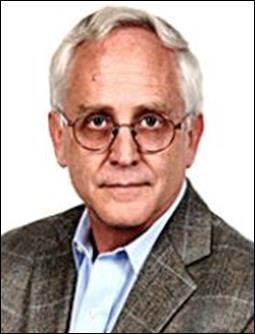
MATTHEW FOREMAN mathematics professor |
|
|
Rothschild’s Opinion
In a brief authored by attorneys Mark M. Hathaway and Jenna E. Parker of Hathaway Parker, Foreman argued that “the requested documents do not constitute a ‘public record’ within the meaning of the CPRA because the documents do not contain information ‘relating to the conduct of the public’s business.’ ” Rothschild responded in Friday’s opinion: “Here, the proposed disclosure is primarily comprised of records UCI Title IX office employees compiled and created during an official investigation of a public employee. [REDACTED.] The records were thus prepared by UCI employees not only acting within the scope of their employment, but fulfilling duties that federal law requires UCI to perform….They satisfy the definition of public records.”
She went on to say:
“Appellant argues the documents address a personal relationship between two professors unrelated to their job duties or UCI’s public business. But appellant does not—and cannot—contend Title IX relieves UCI of its duty to investigate and address sexual harassment complaints when the alleged conduct involves a personal or romantic relationship. Indeed, appellant himself asked the UCI Title IX office to investigate just such conduct. Investigating a formal Title IX complaint is, by law, part of the university’s public business.”
Personnel Files
Foreman sought to rely on Government Code §7927.700, a portion of the CPRA, which provides that the act “does not require disclosure of personnel…or similar files, the disclosure of which would constitute an unwarranted invasion of personal privacy.” He maintained:
“[E]ven if the requested records could be construed as ‘relating to the conduct of the public’s business,’ the records are otherwise statutorily exempt from disclosure because they are personnel records, the disclosure of which would constitute an unwarranted invasion of personal privacy.”
Rothschild said it is not in dispute that the documents are in “personnel…or similar files,” leaving the privacy issue. The appellant also invoked Government Code §7922.000, the CPRA’s “catchall” exception, which says:
“An agency shall justify withholding any record by demonstrating that the record in question is exempt under express provisions of this division, or that on the facts of the particular case the public interest served by not disclosing the record clearly outweighs the public interest served by disclosure of the record.”
Personal Matter
The appellant contended that the public lacks an interest in the records because they arise “from a prior private romantic relationship between two adult, co-equal faculty members that ended acrimoniously for reasons unrelated to their faculty responsibilities.” Rothschild wrote:
“But the documents at issue are not love notes the Times is asking UCI to retrieve from appellant’s private computer; they are materials UCI gathered or created in the context of an official investigation into possible misconduct by a public educator.”
She declared:
“[T]he infringement on appellant’s privacy from UCI’s proposed disclosure—which…is lessened as a result of Roe’s public allegations—does not outweigh the public interests that disclosure serves.”
Indirect Explanation
Rothschild did not explain, directly, why the panel was keeping the appellant’s name secret notwithstanding that it’s a matter of public record.
However, she did say, in the course of balancing Foreman’s interest in secrecy against the public’s potential benefit from disclosure:
“[A]ppellant argues the proposed disclosure would violate his privacy because it ‘concerns deeply personal and disputed allegations arising from a private romantic relationship.’ The Times notes that Roe made these same allegations in her publicly filed civil complaint and police report. We disagree with the Times that this means the proverbial bell cannot be unrung. [REDACTED]. The proposed disclosure thus could further harm appellant’s privacy interest.”
Reverse-CPRA Suits
The Times and Goldberg, in their March 18 appellate brief, decried the effect of reverse-CPRA actions, under which a bar on the release of documents is sought, saying:
“The Times submitted its CPRA request in November 2024. It is now more than fifteen months later, and the records remain hidden from the public. The public has a significant and ongoing interest in understanding how UCI, a public university entrusted with thousands of employees and students, responds to allegations of sexual assault by its faculty. This is precisely the accountability function that the CPRA was enacted to serve….In nearly every one of the published California reverse-CPRA cases, requesters have ultimately obtained disclosure, and yet they have suffered years of delays, even in cases without merit.”
The brief comments:
“The sole cause of this delay is Appellant’s reverse-CPRA action and the stays it has generated. This is far from compliant with the CPRA’s [timing] requirements.”
Government Code §7922.530 requires that agencies make public records “promptly available.”
Foreman’s reply brief notes that UCI’s campus police department undertook an investigation into the rape allegation “but there was no criminal filing.”
The case is Doe v. The Regents of the University of California, B346191.
In addition to representation by Aviles, the Times and Goldberg had the services on appeal by the newspaper’s general counsel, Jeff Glasser.
Hathaway commented yesterday: “Because portions of the Court of Appeal’s opinion remain redacted from public view, we cannot comment comprehensively on the decision. The case raises important questions about the boundary between the public’s right of access under the California Public Records Act and a public university employee’s constitutional right to privacy, particularly where the records concern intensely private matters.
“The court itself acknowledged that disclosure could cause additional harm to the petitioner’s privacy interests, and we believe those concerns deserve substantial weight.
“We are disappointed with the outcome, particularly the court’s conclusion that Title IX investigations into an employee’s private conduct constitutes a public record under the CPRA. We are reviewing the opinion and evaluating whether there are grounds to seek further review by the California Supreme Court.”
Copyright 2026, Metropolitan News Company