Friday, April 17, 2026
Page 3
Suit Accusing Brita of Overstating Filtration Properly Axed
By a MetNews Staff Writer
|
|
|
Depicted above is a screenshot from an exhibit to a plaintiff’s putative class action complaint alleging that The Brita Products Company misled consumers by promising “healthier” water while failing to remove certain common contaminants. The Ninth U.S. Circuit Court of Appeals yesterday affirmed the dismissal, without leave to amend, of the action, saying the plaintiff had failed to allege material omissions as a matter of law. |
|
|
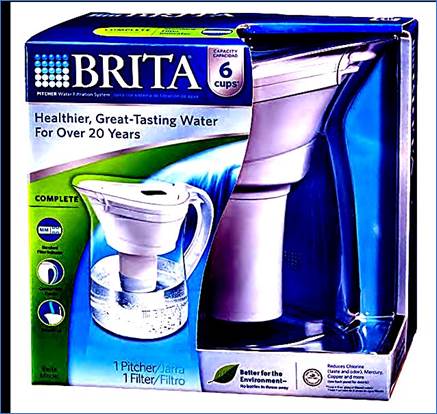
The Ninth U.S. Circuit Court of Appeals held yesterday that a District Court judge properly dismissed, without leave to amend, a putative class action complaint alleging violations of California consumer protection laws by the The Brita Products Company based on labels on filters promising “healthier” water while asserting that the products fail to remove the presence of common contaminants like arsenic and certain so-called “forever chemicals.”
Circuit Judge Kim McLance Wardlaw authored yesterday’s opinion, joined in by Circuit Judges Ana de Alba and Eric Tung, saying that the plaintiff failed to plead any material omission as to the efficacy of the filtration processes and declaring:
“As a matter of law, no reasonable consumer would expect Brita’s low-cost filters to completely remove or reduce to below lab detectable levels all contaminants present in tap water, particularly in light of Brita’s extensive disclosures to the contrary.”
Pointing to front labels on the standard filters that disclose that the product “Reduces Chlorine.., Mercury, Copper and more” and a QR code on the back side of the box linking to a “Performance Data Sheet” that details exactly which contaminants are filtered by the product and to what extent the chemical is removed, Circuit Judge Kim McLane Wardlaw, writing for the court, said:
“Brita discloses that its Products ‘reduce’ contaminants from tap water, not that the Products remove contaminants entirely. Brita’s Products also specifically disclose the contaminants that are reduced and provide easily accessible information (the Performance Data Sheets) as to the extent to which each specified contaminant is reduced.”
California Law
Asserting violations of California’s False Advertising Law and Unfair Competition Law, found, respectively, at Business & Professions Code §17200 et seq. and 17500 et seq., as well as other state law causes of action, was Nicholas Brown, a Los Angeles resident who asserted that he purchased a Brita product containing a standard filter for $15 in 2022.
In September 2023, he filed a putative class action complaint against the Oakland-based company in Los Angeles Superior Court, alleging that “consumers expect that when they purchase a water filtration device, particularly one with the Challenged Representations at issue here, that it will remove and effectively reduce hazardous contaminants commonly found in drinking water” and claiming:
“Unfortunately, the Products are not nearly as effective as Defendant deliberately leads people to believe, causing consumers to overpay millions and forego more effective alternatives. In this way, Defendant has not only bilked millions of dollars from consumers in ill-gotten gains, but Defendant has put the health and welfare of millions of consumers and their families at risk.”
Brown alleged that labels on the company’s water filters promising “Cleaner, Great-Tasting Water” or “Healthier, Great-Tasting Water” operate to “mislead reasonable consumers into believing that the Products remove or reduce to below lab detection limits common contaminants from their drinking water that are hazardous to health, including the Common Hazardous Contaminants” such as arsenic, nitrates, and forever chemicals like perfluorooctanoic acid.
He sought certification of a California and a nationwide class of plaintiffs. Brita, citing diversity of citizenship based on the nationwide class necessarily containing at least one citizen of a state other than California, removed the matter to federal court and filed a motion to dismiss under Federal Rule of Civil Procedure 12(b)(6).
On Sept. 30, 2024, District Court Judge Dolly M. Gee of the Central District of California granted the request, finding that Brown failed to show that Brita’s advertising had the capacity to deceive a reasonable consumer. She declared that “the Court has reviewed the labels and the applicable standards, and determined that Brown’s claims fail as a matter of law” and that “amendment would be futile.”
Reasonable Consumer Standard
Wardlaw noted that to state a claim under the California consumer protection laws cited by Brown, “a plaintiff must allege sufficient facts to satisfy a ‘reasonable consumer standard.’ ” The parties agreed that, in the absence of a contrary misrepresentation, a duty to disclose arises in California if the item contains a defect that poses an unreasonable safety risk or defeats a central function of the product and the omission is material.
Materiality is met if a significant portion of consumers could be misled as to a factor that has a probability of impacting the decision to transact. Applying the standard, Wardlaw remarked:
“Even assuming that Brown’s allegations meet either the unreasonable safety hazard or central function defect test, he still cannot establish that Brita had a duty to disclose that its Products do not completely remove or reduce to below lab detectable levels all of the Common Hazardous Contaminants. Such a disclosure would not be important to a reasonable consumer in light of Brita’s other disclosures on its Products’ packaging and the objective unreasonableness of such an expectation.”
Pointing to the QR code and the wording on the labels, she said that “we cannot say that a reasonable consumer would have been misled by Brita’s omission of these limitations on its Products’ packaging” and said:
“Because the complaint fails to meet the reasonable consumer standard, the district court did not err by holding that Brown’s material omission claim fails as a matter of law.”
She added:
“The district court also properly denied Brown leave to amend his complaint because amendment would be futile.”
The case is Brown v. The Brita Products Company, 24-6678.
Copyright 2026, Metropolitan News Company