Tuesday, May 5, 2026
Page 1
California Supreme Court:
Non-Killer Liable for Murder Only if Aided in Actual Killing
Opinion Says Amendments to Felony-Murder Rule Clearly Require Enhanced Actus Reus for Accomplices Who Act With Intent to Kill, Potentially Opening Resentencing Door to 1987 Rapist; One Jurist Dissents
By Kimber Cooley, associate editor
|
|
|
RICHARD MORRIS JR. defendant |
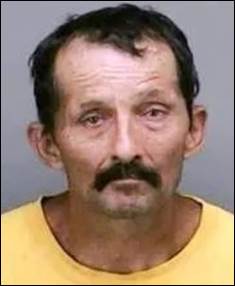
A divided California Supreme Court held yesterday that changes to the Penal Code, adopted in 2018 as limitations on the scope of accomplice liability for crimes resulting in death, require that participants in a criminal scheme who harbor an intent to kill must also be shown to have aided in the fatal act, and not just in the underlying felony, to be liable for murder.
At issue are amendments to Penal Code §189(e) enacted following the passage of Senate Bill 1437 in 2018.
That section now provides that “a participant in the perpetration” of certain enumerated felonies “in which a death occurs is liable for murder only” if the “person was the actual killer,” or, as outlined in subdivision (e)(2), “aided, abetted,…or assisted…in the commission of murder in the first degree” with the “intent to kill, or, as described in subsection (3), was “a major participant in the underlying felony and acted with reckless indifference to human life.”
Justice Joshua P. Groban authored yesterday’s opinion, joined in by Justices Carol Corrigan, Goodwin H. Liu, Leondra Kruger, and Kelli Evans, saying:
“There is no disagreement about the mens rea required under section 189, subdivision (e)(2), as both sides agree that [the statute addresses those who act] with [an] intent to kill. The disagreement involves the actus reus requirement, specifically, what acts are required to prove the actus reus under section 189, subdivision (e)(2). For the reasons explained below, we interpret the phrase ‘in the commission of murder in the first degree’ consistent with its natural meaning to require proof the defendant aided or abetted the actual killer in the lethal act.”
Groban added that the decision resolves “a conflict” that has divided the Courts of Appeal, some of which have found that proof that the defendant aided in the underlying felony is sufficient, and declared, in a footnote, that “[w]e disapprove [those opinions] reaching the opposite conclusion.”
Multiple Interpretations
Chief Justice Patricia Guerrero penned a concurring opinion, saying that she “join[s] in the majority’s holding that [§189(e)(2)] requires a participant…who is not the actual killer to aid or assist in the killing itself.” However, she remarked that “the majority’s interpretation stands in relative equipoise to the interpretation advanced by the Attorney General, the Court of Appeal, and several other courts that have considered the issue” and argued:
“Where, as here, two reasonable interpretations of a criminal statute stand in relative equipoise, the rule of lenity operates to [give preference to the reading that favors the accused]….Applying the rule of lenity, I would adopt the interpretation more favorable to defendant…, and on that basis join in the majority’s interpretation….”
Justice Kenneth Yegan of this district’s Div. Six, sitting by assignment, dissented, arguing that Senate Bill 1437 “is not going to win an award for clarity” and saying:
“When the Legislature announces an unambiguous rule either superseding or modifying the felony-murder rule, I will follow it. They have not done so and the language seized upon by the majority, ‘interpreting’ Penal Code section 189, subdivision (e)(2), is, in my opinion, a judicial stretch. There is way too much ‘interpretation’ going on here.”
The bill was jointly authored by two former state senators, Nancy Skinner, a Berkeley Democrat, and Joel Anderson, a Republican who served parts of San Diego and Riverside Counties.
1987 Murder
The question arose after Jimmy Casino, the owner of an Orange County strip club who had his name legally changed from James Stockwell, arrived home to his Buena Park area home with his girlfriend in January 1987 to find two men waiting. After Casino was handcuffed, both suspects raped S.F., who discovered her boyfriend dead on the floor from a single gunshot wound after the perpetrators fled the scene.
Evidence collected during a rape examination was reexamined in 2009, and analysts determined that DNA belonging to Richard Morris Jr. was present. In 2013, a jury found Morris guilty of first-degree murder and found true three special circumstances; then-Orange County Superior Court Judge Francisco Briseno (now deceased) sentenced Morris to life without the possibility of parole.
After his conviction was affirmed, Morris petitioned for resentencing under Penal Code §1172.6, adopted as part of Senate Bill 1437, arguing that he could have been convicted under the invalidated felony-murder rule.
In 2022, Orange Superior Court Judge Lewis Clapp summarily denied the petition, acknowledging that the jury was instructed on two theories—premeditated and felony murder—but pointing out that the special circumstance instructions required the jury to find that Morris acted with an intent to kill.
A divided Div. Three of the Fourth District affirmed, in an opinion authored by Justice Thomas A. Delaney and joined in by then-Presiding Justice Kathleen O’Leary (now retired), rejecting the defendant’s assertion that he must have been found to have aided in the actual killing to remain liable under a felony-murder theory after the 2018 amendments. Justice Eileen C. Moore dissented.
Intent to Kill
Noting that there was no “real” dispute that “the record of conviction establishes as a matter of law that Morris acted with the intent to kill” and that, “even if Morris did not fire the fatal shot, he aided and abetted the actual killer in the underlying felonies,” Groban turned to the actus reus requirement. He wrote:
“[A]iding ‘the actual killer in the commission of murder in the first degree’ means just that. The commonsense meaning of aiding or abetting ‘the actual killer in the commission of murder in the first degree,’ involves aiding or abetting the killing of a human being, and not just aiding another in the commission of an enumerated felony by an act that does not aid in the killing….To aid ‘the actual killer’ is to aid the very act that defines that individual—the lethal act itself….In this way, the language of section 189, subdivision (e) is ‘plain and unambiguous.’ ”
Saying that the fact that the bill refers to “underlying felony” in subsection (e)(3) “shows that the Legislature knows how to use [that] term…when that is the intent,” he added:
“The use of different phrases signals the Legislature intended to define different acts necessary to prove guilt under each theory.”
Prior Case Law
Lawyers with the Attorney General’s Office argued that the court’s reading conflicts with its own decision in the 2005 case of People v. Dickey, dealing with the felony-murder special circumstance. In that opinion, the court said that the words “in the commission of murder in the first degree” only require aiding and abetting the underlying felony and not the lethal act itself.
Opining that the reliance on Dickey “is misplaced” because it was based on “a background legal principle that is no longer good law,” Groban wrote:
“Specifically, Senate Bill 1437 abrogated the premise of Dickey by substantially changing the felony-murder rule…. To allow the now-outdated legal principle informing Dickey to dictate our decision here would be circular and inconsistent with the very purpose of Senate Bill 1437’s changes to the felony-murder rule.”
Rejecting a reading that would “create an inversely proportional relationship between actus reus and mens rea for the three theories of felony-murder liability in subdivision (e),” he added:
“[I]t is not illogical to conclude that the Legislature sought to capture three different scenarios of potential liability—as opposed to create a perfect, inverse sliding scale of actus reus and mens rea culpability—especially since there is nothing in the legislative history that reflects such an intent.”
Yegan’s View
Saying that “[o]ne hundred seventy-five years of felony-murder precedent should not be set aside by an ambiguous statute,” Yegan wrote:
“The majority opinion here declares that the language chosen by the Legislature satisfies the statutory construction rules. That is to say, the statute passes the ‘plain and common sense’ test and is ‘clear.’….Well, it was not ‘plain and common sense’ and ‘clear’ to Justice Delaney, Presiding Justice O’Leary, [and others]. It is not ‘plain and common sense’ to the Chief Justice….And, it is not ‘plain and common sense’ and ‘clear’ to me.”
Disagreeing with Guerrero’s take, he remarked:
“The rule of lenity, relied upon by the Chief Justice, is well known….In my view, it has no application here. The statute is ambiguous and we should not ‘save’ it with an imaginative interpretation. We should not have to ‘interpret’…or ‘guess’ at what the Legislature intended.”
He continued:
“The facts of the instant case demonstrate…[a] sophisticated plan to commit, at the very least, residential burglary and armed robbery. And, appellant Richard Morris, Jr., did assist even under the new majority ‘interpretation’ of the felony-murder rule. He helped to handcuff the victim in his bedroom before the victim was executed. It is much easier for an actual murderer to execute the victim if he is handcuffed. It appears that the only reason why appellant was not in the bedroom assisting in the actual shooting, is because he was busy forcibly raping the murder victim’s girlfriend in another bedroom.”
The case is People v. Morris, 2026 S.O.S. 1259.
Copyright 2026, Metropolitan News Company