Thursday, December 11, 2025
Page 1
Retired C.A. Justice William Murray Jr. Receives Public Censure, Bar on Future Judicial Service
By a MetNews Staff Writer
|
|
|
WILLIAM J. MURRAY JR.
|
|
|
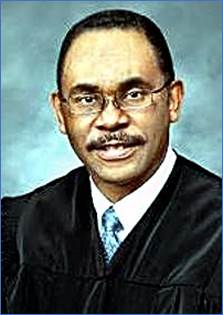
Former Third District Court of Appeal Justice yesterday drew a public censure and a bar from future service by the state’s judicial disciplinary body for engaging in “a pattern of chronic decisional delay” relating to well over 100 cases between April 2012 to January 2022.
Yesterday’s decision follows the commission’s acceptance of a stipulation between the oversight body and Murray to resolve disciplinary charges against the retired justice. As part of the agreement, Murray admitted to failing to promptly author opinions in 132 cases that were assigned to him for drafting.
Twenty-four of the cases sat for five to eight years after being fully briefed by the parties, including two juvenile matters. The jurist admits that his decisional delay caused actual prejudice to some litigants.
The Commission on Judicial Performance (“CJP”) said that “[c]orrective measures, such as reducing the number and complexity of assignments and reassigning cases to other justices, failed to resolve Justice Murray’s backlog” and that “[f]rom 2016 through 2020, Justice Murray was assigned fewer total cases than any other Third District justice.”
In the order, the committee added:
“Although all Third District justices may designate one assignment-free month per year, Justice Murray was assigned no new chambers cases for eight months in 2017, five months in 2018, seven months in 2019, six months in 2020, and at least three months in 2021.”
Reassigned to Others
Saying that “[f]rom 2017 through 2019, at least 31 of Justice Murray’s delayed cases were reassigned to other justices to complete,” the body noted:
“There were eight cases in which another justice sought to be reassigned from a panel because of concern about Justice Murray’s decisional delay.”
Accusing Murray of “not effectively discharg[ing] his administrative responsibilities” relating to unnamed research attorneys he alleged had produced inadequate or late work-product, the commission remarked:
“Despite being dissatisfied with the work of certain attorneys, Justice Murray did not effectively address those personnel problems.”
One case highlighted by the CJP was a criminal securities fraud matter involving multiple senior-citizen victims who were unable to obtain restitution until the appeal was complete. Murray did not file a decision until almost four years had passed since the case had been assigned to him; one elderly victim died before the case was resolved.
In other matters, litigants were forestalled in bringing a matter to trial or initiating new proceedings.
The CJP declared:
“Justice Murray neglected his duty to promptly and efficiently decide cases by failing to curtail his extensive participation in non-core judicial activities, including work on judicial branch and other committees, and in judicial and legal education programs, court outreach activities, and community work between 2011 and 2021. In some cases, he did not minimize the impact of delay by prioritizing the delayed matters….”
Growing Scrutiny
The jurist retired on Jan. 27, 2022, in the wake of growing scrutiny into the Sacramento-based Third District over allegations of a culture of foot-dragging by multiple members of the court.
Sonoma County lawyer Jon B. Eisenberg publicly revealed in 2023 that he had filed a complaint with the CJP against Murray, former Presiding Justice Vance W. Raye, now-deceased Justice Coleman Blease, and Justice Harry E. Hull, accusing the jurists of allowing hundreds of appeals to languish undecided for years after briefing.
Raye was publicly admonished in May 2022 and agreed to resign as well as to never hold judicial office again. Blease retired the following month and died a few months later.
Hull, who remains a member of the court, is believed to be the unnamed jurist who received an advisory letter last year—the lowest form of judicial discipline—for “issuing opinions” in “numerous” matters “more than three years after each case was fully briefed and assigned.”
Charges were filed against Murray on June 10. A public hearing had been scheduled for Dec, 1 but on Nov. 26, the CJP signaled that a settlement had been reached, announcing:
“The commission has issued an order vacating the hearing date. A further public announcement will be issued forthwith.”
Murray had signed the stipulation on Nov. 24.
Seven members on Dec. 3 voted in favor of accepting the stipulation and issuing the public censure, while two members recused themselves and two others did not participate.
Murray’s Comments
Murray yesterday acknowledged the accuracy of the CJP’s findings but pointed out that he had been diagnosed with sleep apnea in 2013, resulting in “daytime somnolence,” and had suffered two ischemic strokes in August 2017. Both conditions were noted in yesterday’s decision.
The former jurist added:
“What is…not in the Stipulation are my efforts to absolutely ensure the opinions I authored arrived at the right result for the right reasons, that they were supported by the record and the law, and that justice was served. To that end, I devoted significant time and energy to personally researching the record and the law in most of my cases. The Commission does not dispute this, but criticized this approach as inefficient. I acknowledge that this effort contributed to the delays and I overextended myself by doing that extra work.”
He continued:
“I accept responsibility for my conduct even under the circumstances I faced. I have no regrets in agreeing to enter a stipulated result—I am retired and relieved to put this 5-year odyssey with the Commission behind me. That said, I feel it is important to present a more fulsome picture here—for the good of those judicial officers and staff who toil in some of the same ways I did, have challenges outside their control, and who work tirelessly and with dedication to the greater good in the same uncelebrated ways.”
Explaining that one of the “underperforming attorneys” noted in the decision had a serious injury followed by a pregnancy, he said that “I did not know how to increase her productivity and thought I should give her the time and space to recover from the surgery and later adjust to being a new parent.”
He was careful to “thank the two [excellent] chambers attorneys who were working with me when I retired,” saying that “things would have been different if they had worked for me the entire time I was at the Third District.”
Copyright 2025, Metropolitan News Company